
Sacramento Rideshare Accident Lawyer
Four people can walk away from the same Uber or Lyft crash with four different claims. The back-seat rider, the other driver, the cyclist at the curb and the rideshare driver each face a different insurer and different rules. A Sacramento rideshare accident lawyer sorts that out by asking where you were when the cars collided. The text of Public Utilities Code section 5433 spells out the coverage Uber and Lyft must carry, and the amount changes with the driver’s app status.
This page follows that idea seat by seat. After the app status rules that apply to everyone, it covers the passenger, the other car, the person on foot or on a bike, and the injured rideshare driver. Each section names the coverage that pays first and the records worth requesting now.
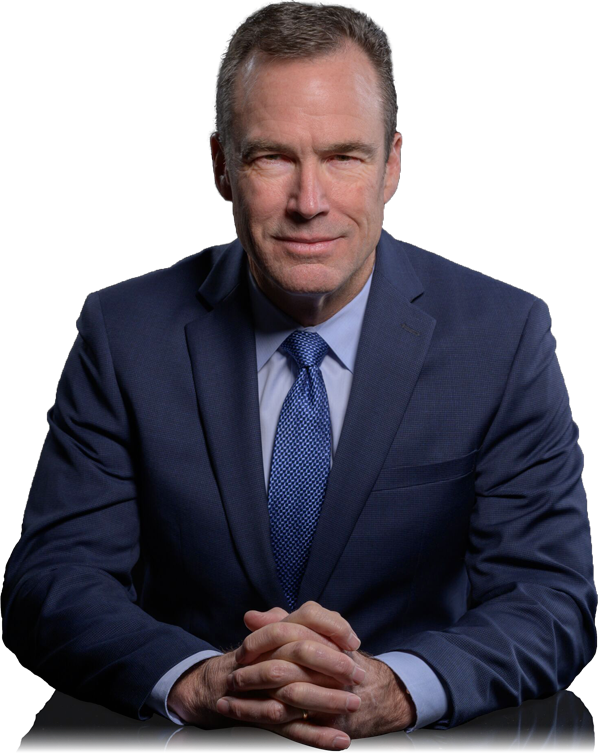
The State Bar of California admitted Christopher L. Kreeger in 1990. Two federal courts admitted him as well, the Ninth Circuit and the district court for California’s Eastern District. He works out of the firm’s Roseville office on Douglas Boulevard, and motor vehicle crashes make up most of his caseload. Chris holds membership in the Multi-Million Dollar Advocates Forum as well as the Million Dollar Advocates Forum. Avvo rates him 10.0 Superb.
Hurt in an Uber or Lyft crash around Sacramento? Kreeger Law Firm offers a free consultation at (916) 782-8400 about which policy covers your seat.
Learn About Your Options After an Uber or Lyft Accident
How a Sacramento Rideshare Accident Lawyer Reads the App Status at Impact
At Kreeger Law Firm, a rideshare case gets the same groundwork as any other car crash claim, plus one more question. What did the driver’s phone show at the moment of impact? Fault rules, medical bill rules and filing deadlines work the way they do in an ordinary two-car collision. The insurance does not, because California ties the rideshare company’s coverage to the app.

Take a Lyft driver who drops a rider in Midtown, closes the trip and rolls toward the next block with the app still open. If that driver rear-ends you a minute later, the $1,000,000 policy that covered the ride no longer applies. A smaller policy does, and only the trip records can confirm which window was open.
Three App Status Windows and the Coverage Each One Triggers
Insurers and the California Public Utilities Commission refer to these windows as periods. Section 5433 sets the coverage for two of them, waiting for a request and an accepted trip. The third is the time before log-on, when no rideshare insurance applies at all. Only one window applies at any given moment, so the exact time of the crash carries real weight.
Driver Offline, With Personal Auto Coverage Only
Until the app is on, the driver is just another motorist. The driver’s personal auto policy answers for the crash, and California’s minimum for that policy is 30/60/15. Section 5434 explains why the app matters even here. Once the driver logs on, a personal policy covers nothing unless it expressly includes rideshare driving or carries an endorsement for it.
Logged In With No Trip Accepted Yet
Between log-on and an accepted request, rideshare insurance must provide at least $50,000 for each injured person and $100,000 for each incident. Property damage coverage starts at $30,000. Above those amounts, the company must carry $200,000 in excess coverage. This tier also covers the stretch between a finished ride and the next accepted request or log-off.
Trip Accepted Through the End of the Ride
Once a driver accepts a trip, the required coverage rises to $1,000,000 for death, injury and property damage. It covers the drive to the pickup and lasts until the later of two points, the end of the ride and the close of the trip in the app. The insurer must defend and indemnify the driver.
Records That Pin Down the Driver’s App Status
Drivers sometimes tell an adjuster they were offline, and sometimes they honestly do not remember. The real answer sits on servers the company controls. Two kinds of records usually settle it, one held by the company and one sitting on the phones of the people involved. Both are worth requesting early, well before anyone’s account of the evening starts to harden.
The Section 5435 Duty to Share Login Times
Under Public Utilities Code section 5435, a rideshare company or its insurer must cooperate with the other insurers in a claims coverage investigation. That duty reaches the exact log-on and log-off times along with when the crash occurred. Section 5433 adds that rideshare coverage cannot be held back until a personal insurer says no. Together, those rules keep the insurers from passing your claim back and forth.
Trip Receipts and Screenshots From Your Own Phone
A rider’s app records the trip start, the route and the drop-off time. Section 5445.1 requires the app to show the driver’s first name, photo, vehicle and license plate when the match is made. Screenshot those screens the same day. A witness who noticed a phone mounted on the dash can add what the logs leave out.
(916) 782-8400
Call for a free consultation
What a Sacramento Uber Accident Lawyer Checks When You Were the Passenger
Sacramento Lyft Accident Attorney Help When a Rideshare Driver Hits Your Car
Public Utilities Code section 5442 requires a rideshare driver to carry proof of rideshare insurance whenever the app is in use. After a crash, the driver must give that information to anyone else involved and to a police officer who asks for it. A driver may still hand over only a personal insurance card. Ask for both cards, and photograph each one.
For you, the motorist in the other car, the app window is everything. A driver who was offline brings only a personal policy, possibly at the 30/60/15 minimum. A driver with a passenger aboard brings $1,000,000. Same car, same driver and same intersection, yet the coverage can differ by more than 30 times depending on a status screen you never saw. The records decide which one you are dealing with.
Proof of Coverage to Collect at the Scene
Photograph the Uber or Lyft sign on the car. CPUC rules require that trade dress to be visible from the front and the rear. Take a picture of the phone mount and the screen if you can see it. Get the driver’s name, plate number and both insurance cards. With those details, a lawyer can open the right claim with the right carrier in the first letter.
Event Traffic Around Golden 1 Center and Downtown Pickups
Golden 1 Center seats 17,608 people for Kings games. The arena lists accessible drop-off and pick-up points at 4th and J, 6th and J by way of a one-way alley, and 7th and K. For some events under 3,500 people, it adds 6th and L streets when L Street stays open. When a game or concert lets out, riders request cars at the same time and drivers circle the same few blocks.
Double-Parking and Crosswalk Stops Under Vehicle Code Section 22500
Vehicle Code section 22500 bars stopping in a crosswalk and stopping on the roadway side of a car already parked at the curb. Both can happen when drivers try to grab riders at a downtown corner after an event. A driver who double-parks and then swings back into your lane without looking supports a strong fault argument. Dashcam video and the trip map help show where the car was sitting.
Accepting the Next Ride With a Tap While Moving
Ride requests often arrive while a driver is still moving. Vehicle Code section 23123.5 lets a driver touch a phone only when it is mounted and the action takes a single swipe or tap. Typing, scrolling or holding the phone falls outside that rule. App timestamps can show a request landing seconds before impact, which matters in any distracted driving crash claim.
Shared Limits When Several People in Your Car Are Hurt
The per-incident cap matters most when your car was full. Suppose the rideshare driver was waiting for a request and four people in your car were hurt. All four share the $100,000 per-incident limit, plus whatever the $200,000 excess layer adds. Each person still needs separate medical records and a separate claim. Your own underinsured motorist coverage may fill part of the gap, depending on its limits.
Why Pedestrians and Cyclists Hit by Uber or Lyft Call a Sacramento Rideshare Accident Lawyer
In 2023, City of Sacramento crashes killed or injured 297 people on foot and 237 people on bicycles, according to California Office of Traffic Safety rankings. That put the city 4th of 15 large California cities for pedestrian victims and 3rd of 15 for bicyclists, where 1st marks the worst record. Rideshare trips add their own risk to those streets, because every trip ends with a car stopping near a curb where people walk and ride.

Someone on foot or on a bike faces the same app status question as everyone else. The difference is that no car of your own was part of the crash, which changes how your own insurance fits in. The firm’s guides to Sacramento pedestrian injury claims and bicycle crash cases in Sacramento cover the right-of-way rules in more depth.
Hit While Walking Near a Pickup Spot
A pedestrian struck by a rideshare driver has a claim against that driver, and the app window sets the coverage behind it. The household uninsured motorist protection described above for passengers follows you on foot as well. That matters most when a driver hits you and leaves. A photo of the Uber or Lyft sign, a partial plate or the name of a witness gives the claim a starting point.
Walking to the Ride App Pickup Areas at Sacramento International Airport
Sacramento International Airport, at 6900 Airport Boulevard, assigns rideshare pickups to designated areas at each terminal. The airport moved Terminal B pickups next to Hourly Lot B in November 2018 because curbside stops had backed up traffic. At the time, it counted about 3,000 app-based rides a day. Travelers now cross lanes and lots on foot to reach drivers searching for the right passenger. Sacramento County runs the airport, so a claim blaming the layout starts with a government claim filed within six months.
Doored or Cut Off in a Bike Lane
Rideshare stops create a hazard cyclists know well. A car swerves into the bike lane, stops short, and a rear door swings open. Two separate rules can apply here, one to the driver and one to the passenger. A claim may run against either person or both, and each one may bring different insurance. Note which door opened and who climbed out.
The Driver’s Limits Under Vehicle Code Section 21209
Vehicle Code section 21209 lets a car use a bike lane only to park where parking is allowed, to enter or leave the roadway, or to turn. The turn exception covers the last 200 feet before an intersection. A mid-block stop in the lane to pick up a rider is hard to fit into any of those. Trip data showing the exact pickup pin can back up what you saw.
The Passenger’s Duty Under Vehicle Code Section 22517
Vehicle Code section 22517 bars any person from opening a door on the side available to moving traffic unless it is reasonably safe. The rule covers passengers, not only drivers. A rider who swings the rear door open into a bike lane can share fault with the driver who stopped there. Whether the rideshare policy covers the passenger’s share depends on how that policy defines who it insures.
Winning serious victories for our clients
- $6,000,000 Motorcycle Accident
- $5,000,000 Construction Site Accident
- $3,200,000 Rear End Collision
- $2,500,000 Apartment Fire Accident
- $2,500,000 Apartment Fire with Severe Burns
- $1,000,000 Rear End Freeway Collision
- $1,000,000 Rideshare Head-On Collision
- $1,000,000 Rideshare Accident with Back Injury
- $400,000 Pedestrian Hit in Crosswalk
- $300,000 Side Impact Collision
- $300,000 Big Rig Rear-Ended Passenger Vehicle
- $240,000 Motorcycle vs. Automobile
Past results do not guarantee or predict a similar outcome in any future case. Every case depends on its own facts and the law that applies to it.
Proposition 22 Rules a Sacramento Uber and Lyft Driver Injury Attorney Applies
Uber and Lyft Crash Questions for a Sacramento Rideshare Injury Attorney
Calls after an Uber or Lyft crash tend to circle the same few concerns. People ask whether they can sue the company itself, how long they have to act and what hiring Chris would cost. Most of those calls arrive while the insurers are still arguing with each other over the app window.
The answers below are general. Your trip records, your policies and your injuries decide how any of them fits your situation. There is no charge for Chris to look at those details, and talking with him creates no obligation to hire the firm.
Can I Sue Uber or Lyft Directly?
Sometimes. Section 5433 does not cap what the company itself can owe in a lawsuit. Section 5445.2 bars the companies from keeping drivers with certain convictions, including a DUI within the past seven years. The California Public Utilities Commission has also required a zero-tolerance drug and alcohol policy since it created the rideshare category in 2013. A company that ignored those rules may face its own negligence claim, and the arbitration clause may decide where it is heard.
How Long Do I Have to File After a Rideshare Crash?
California generally allows two years from the crash to file an injury lawsuit. A crash involving a SacRT bus or another public vehicle requires a written government claim within six months. Arbitration demands under the rider terms follow their own notice steps first. Start early to keep every deadline open while the insurers argue about the app window.
What Does Chris Charge for an Uber or Lyft Case?
Chris takes rideshare cases on contingency. The fee is typically one third of what is recovered, or 25% when the injured person is under 18. Kreeger Law Firm fronts the case costs, then takes them out of any recovery separately from the fee. If the case recovers nothing, you do not repay any of those costs. The firm’s frequently asked questions about fees explain the arrangement in full.
Ask a Sacramento Rideshare Accident Lawyer Which Policy Covers Your Seat
Rideshare evidence lives on company servers, in phone screenshots and in the memories of people who scattered after the crash. As long as the app window stays unproven, every insurer involved can point at another one. One phone call can start the requests that settle it.
Kreeger Law Firm offers a free consultation to riders, drivers, pedestrians and cyclists hurt in Uber and Lyft crashes across Sacramento. Chris Kreeger will look at where you were, what the app showed and which policies may apply, then explain your options in plain language. No one can promise how a claim will end, but you can learn where yours stands before you talk to an adjuster. The office also has Spanish-speaking staff.
For a Sacramento rideshare accident lawyer to sort out the coverage for your seat, use the contact page on this site or call (916) 782-8400 today.
Other Injury Cases Chris Kreeger Handles in Sacramento
Kreeger Law Firm also represents people hurt in these Sacramento crashes and injury claims.


