Traumatic Brain Injury Attorney in Sacramento
A brain injury rarely shows up in one clean test result. A traumatic brain injury attorney in Sacramento has to collect the paramedic notes, the scans, the lab work and the testing done weeks later, then show how those pieces fit together. The CDC page on mild TBI and concussion says doctors do not need a brain scan to identify a concussion. It also warns that a clean result on cognitive tests does not rule one out.
This page follows those records in the order they are usually created, from the Glasgow Coma Scale score at the scene to vision and balance testing months later. Each section covers what a test shows, what it misses and how insurers argue about it. None of this is a diagnosis, because only your doctors can decide what your injury is.
Christopher L. Kreeger has practiced law since the State Bar of California admitted him in 1990, and injury cases are the focus of his work. From its main office in Roseville, at 3300 Douglas Boulevard, Suite 145, Kreeger Law Firm takes brain injury claims from across Sacramento County. Car crashes make up most of the practice, and they cause many of the head injuries described below. Chris carries Martindale-Hubbell’s AV Preeminent rating, and in 2003 the Capitol City Trial Lawyers Association elected him president.
If a crash or fall in Sacramento left you or a family member with a head injury, you can reach Kreeger Law Firm at (916) 782-8400 for a free consultation. The firm takes an attorney fee only out of money it recovers, and a case that closes with no recovery leaves you owing nothing for case costs.
1990
Licensed in California
10.0
Avvo Superb Rating
AV
Martindale-Hubbell Preeminent
3x
Super Lawyers, 2023 to 2025
How a Traumatic Brain Injury Attorney in Sacramento Builds a Claim Test by Test
At Kreeger Law Firm, a brain injury file is sorted by test rather than by date of service. Each test answers one narrow medical question. A CT asks whether bleeding or a fracture needs urgent care. A neuropsychological battery asks how well you remember, focus and solve problems compared with people your age. None of them was built to answer the legal question, which is whether this crash changed how your brain works.

Insurers use that mismatch. An adjuster reads a normal CT as proof that nothing happened, then reads a low memory score as proof of a problem you had before the crash. The answer is to know what each test was designed to find. How much weight an adjuster or a jury gives any one result depends on the whole record, which a lawyer has to review.
Why One Normal Result Does Not End a TBI Claim
Brain injury tests fall into two groups. Structural tests, such as CT and MRI, look for physical damage that appears on an image. Functional tests, such as neuropsychological, vision and balance testing, measure what the brain can actually do. A concussion often leaves the images looking normal while function drops. A claim built only on imaging leaves out the tests most likely to capture that change.
The Order Records Usually Arrive After a Sacramento Crash
Picture a driver rear-ended on Highway 50 near the Watt Avenue exit. Paramedics score her alertness in the ambulance. The emergency department orders a head CT and perhaps a blood test, and she goes home that night. An MRI may follow weeks later if headaches continue, and neuropsychological testing often comes months after that. The collision report and the insurance limits run on a separate track, covered on our page about Sacramento car accident claims.
Glasgow Coma Scale and EMS Records a Sacramento TBI Attorney Requests First
Head CT and Blood Test Results a Sacramento Head Injury Attorney Reviews
The Sacramento County EMS Agency’s 2023 trauma system report names UC Davis Medical Center on Stockton Boulevard as the only Level I trauma center in the county, and it treats both adults and children. The Level II centers are Kaiser Permanente South Sacramento on Bruceville Road and Mercy San Juan in Carmichael. At each one, the head CT and any blood test answer the same question, which is whether there is damage that needs urgent treatment.
That question is narrower than the one your claim asks. A CT or a blood test can come back normal while headaches, memory lapses and trouble focusing continue for months. Knowing what each test was designed or cleared to do is how you answer the argument that a normal result settles the case.
What a Head CT Shows in the Emergency Department
A CT scan is usually the first imaging test after a suspected brain injury. Mayo Clinic explains that it quickly shows skull fractures, bleeding, blood clots, bruised brain tissue and swelling. Those findings can require surgery, so speed matters more than fine detail. Ask for the images themselves along with the radiologist’s written report. California Health and Safety Code section 123110 requires a provider to send copies within 15 days of a written request, and the charge for imaging copies cannot exceed actual cost.
Normal Imaging Is Part of the Definition of Mild TBI
Adjusters rarely mention this point. The Defense Department and VA severity table lists normal structural imaging as one of the features of a mild TBI. Moderate and severe injuries may show normal or abnormal imaging. A normal CT is therefore what a mild brain injury is expected to look like, not proof that no injury occurred. Your treating doctor makes the diagnosis, but the definition itself cuts against the adjuster’s favorite argument.
CT Bleeding Patterns Linked to Slower Recovery
A positive CT changes the dispute. The NIH-funded TRACK-TBI project studied 1,935 people with mild TBI and reported its CT findings in JAMA Neurology in 2021. Contusions, subarachnoid hemorrhage, subdural hematoma and bleeding into the ventricles were linked to worse outcomes at 12 months. An epidural hematoma was tied to incomplete recovery at two weeks and three months. What a finding like that means for one person still depends on that person’s own records.
The FDA-Cleared GFAP and UCH-L1 Blood Test
Some emergency departments now draw blood to help decide whether a head CT is needed at all. The test looks for GFAP and UCH-L1, two proteins that leak from damaged brain cells into the bloodstream. The FDA first authorized a test of this kind, called Banyan BTI, on February 14, 2018. On March 27, 2024, it cleared a whole-blood version, listed in the FDA 510(k) record for the i-STAT TBI cartridge. Both are limited to adults 18 and older with suspected mild TBI and a Glasgow score of 13 to 15.
What a Not Elevated Result Actually Predicts
A “Not Elevated” result is associated with the absence of acute traumatic lesions visible on a head CT. In the study the FDA reviewed for the 2024 cartridge, a negative result matched a clean CT 96.5% of the time. It says nothing about concussion symptoms, memory or attention, because researchers measured the test only against CT findings. When an adjuster calls a negative blood test proof that your brain is fine, the FDA’s own language does not support that reading.
An Elevated Result Paired With a Clean Scan
The opposite result invites its own fight. In that same FDA review, 410 of the 687 people whose CT showed no lesion still tested “Elevated,” or about 60%. The defense calls those readings false alarms. Because the study compared results only with CT, it cannot say what high protein levels mean when the CT is clean. Treat an elevated result as one more data point for your doctors, not as proof for either side.
Time Limits on the Blood Draw
Both versions of the test work only inside a set window after the injury. The FDA authorized the 2018 test for serum collected within 12 hours. The 2024 cartridge runs on venous whole blood, is cleared for point-of-care settings as well as clinical labs, and extends the window to 24 hours. A patient who reaches care late may never get either test, and a missing result proves nothing in either direction. Compare the time of the draw in your chart with the time of the crash.
(916) 782-8400
Call for a free consultation
What MRI and Newer Imaging Mean to a Sacramento Brain Injury Lawyer
Neuropsychological Testing and Your Sacramento Traumatic Brain Injury Lawyer
Months after the crash, the question shifts from what the scans show to what you can still do. A neuropsychologist answers it with several hours of standardized tests. Cleveland Clinic lists the abilities these batteries measure, including attention, learning, memory, processing speed, reasoning, problem-solving and visuospatial skills. Your scores are compared with people of the same age and sometimes similar education.

This test usually turns complaints into numbers, and insurers attack it hardest because a low score can have more than one explanation. Cleveland Clinic notes that neuropsychological testing does not diagnose a condition directly. It gives doctors information to weigh with the rest of the record, and a careful lawyer presents it the same way.
Preseason Baselines and Other Before-and-After Comparisons
A pre-injury score is the strongest comparison a neuropsychologist can get. Cleveland Clinic says athletes in contact sports usually take a baseline concussion test, such as the computerized ImPACT test, before the season starts. When that athlete is later hurt in a crash, the post-injury result can be set beside the preseason number. Most adults have no baseline, so the comparison comes from history and from witnesses in California brain injury cases who knew the person before and after.
How Insurers Push Back on Low Neuropsychological Scores
A low score rarely goes unchallenged. Expect the defense to offer another reason for it and to ask for its own testing. Each argument has a familiar shape. These are the three you are most likely to see in a Sacramento claim. Each one is easier to answer when the treatment and school records are gathered before the defense raises it.
Healthy Adults Post Some Low Scores Too
The first argument is statistical. Research published in the journal Assessment in 2019 found that about one in three cognitively normal older adults scored low on at least one of 10 measures. The more tests a battery includes, the more likely a healthy person is to miss on one of them. Defense examiners use this to dismiss a single low score, so the stronger record shows a pattern across related tests that matches your complaints.
Depression, Pain and Poor Sleep as the Defense Explanation
The second argument blames something other than the brain injury. Defense examiners point to depression, anxiety, chronic pain, poor sleep or pain medication as the reason for slow or scattered results. Some of those conditions may themselves follow the crash, which matters when the defense says they came first. Treatment records from before the injury answer the timing question better than anyone’s memory.
A Defense Neuropsychologist Needs Court Permission or Your Agreement
The third move is a repeat battery by the defense’s chosen psychologist. Under California Code of Civil Procedure section 2032.310, a party seeking a mental examination must first get leave of court. Parties often agree to the terms in writing instead. Either way, the scope of the testing gets set before the exam day, not in the exam room.
Winning serious victories for our clients
- $6,000,000 Motorcycle Accident
- $5,000,000 Construction Site Accident
- $3,200,000 Rear End Collision
- $2,500,000 Apartment Fire Accident
- $2,500,000 Apartment Fire with Severe Burns
- $1,000,000 Rear End Freeway Collision
- $1,000,000 Rideshare Head-On Collision
- $1,000,000 Rideshare Accident with Back Injury
- $400,000 Pedestrian Hit in Crosswalk
- $300,000 Side Impact Collision
- $300,000 Big Rig Rear-Ended Passenger Vehicle
- $240,000 Motorcycle vs. Automobile
Past results do not guarantee or predict a similar outcome in any future case. Every case depends on its own facts and the law that applies to it.
Vision and Balance Tests a Sacramento Concussion Attorney Adds to the File
Meet Christopher Kreeger
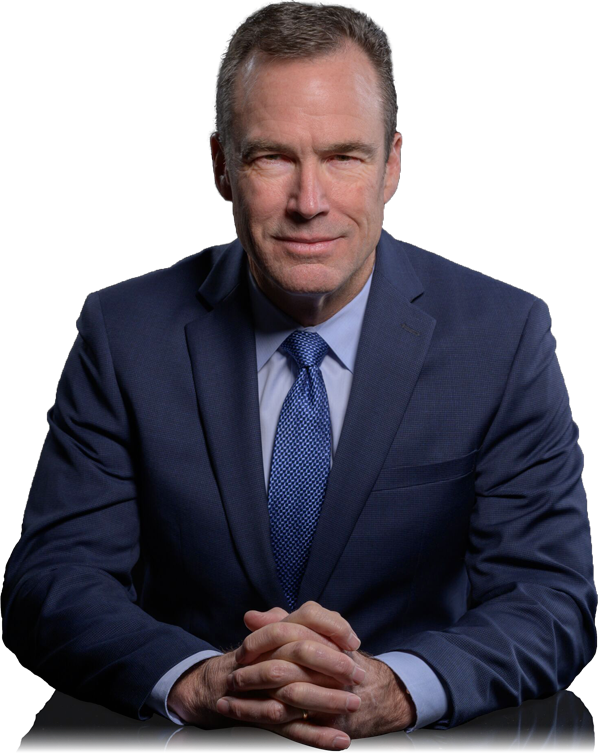
Christopher L. Kreeger is a California native and an experienced personal injury attorney, dedicated to exclusively representing individuals seriously injured due to the carelessness and neglect of others.
A Children’s Hospital of Philadelphia study of 100 concussion patients aged 11 to 17 found that 69% had at least one vision diagnosis. About half had convergence insufficiency, trouble keeping both eyes aimed at a close target, compared with 2% to 8% of the general population. Blurred reading, dizziness in a busy store and unsteady footing on stairs are common complaints after a concussion. Unlike many symptoms, these problems can be measured.
Dizziness and eye strain have many causes, and some of them come with age. The strength of these records depends on when the testing happened and on what earlier eye or ear records show. A Sacramento driver who had no vision complaints before a crash on Interstate 80 has a cleaner comparison than someone with years of vertigo visits.
Eye Movement and Convergence Screening After a Concussion
UPMC researchers introduced the Vestibular/Ocular Motor Screening, known as VOMS, in 2014. The screen takes 5 to 10 minutes and checks smooth tracking, rapid eye movements, the vestibular-ocular reflex, sensitivity to visual motion and near point convergence. Part of it relies on symptoms the patient reports, which the defense calls subjective. The convergence measurement is a distance on a ruler, and that number is harder to argue with.
Balance and Vestibular Testing After a Head Injury
Balance problems after a head injury can come from the brain, the inner ear or both. Testing tries to separate those sources, because the cause shapes both treatment and the legal argument. A physical therapist or physician may run several tests across more than one visit, and each visit adds a dated record. Two tests that often appear in concussion records are described below.
The Balance Error Scoring System
The Balance Error Scoring System, or BESS, scores balance across six stances held with the eyes closed and the hands on the hips. Cleveland Clinic describes three stances on a firm surface and the same three on foam, each held for 20 seconds. The examiner counts balance errors in each stance. Error counts that stay high across several visits are easy for a jury to follow.
Positional Vertigo Confirmed by the Dix-Hallpike Test
Benign paroxysmal positional vertigo, or BPPV, causes brief spinning when the head changes position. The StatPearls chapter on BPPV calls head injury its most common secondary cause, accounting for 7% to 17% of cases. Doctors confirm the most common form with the Dix-Hallpike test, which brings on a jerking eye movement called nystagmus. A positive test documents the vertigo objectively, and a chart dated soon after the crash ties it to the timeline.
The Idiopathic Vertigo Defense
StatPearls also reports that 50% to 70% of BPPV cases have no known cause. It notes that the condition most often begins between the fifth and seventh decades of life. A defense doctor can use both facts against an older patient. Prior records showing no vertigo complaints are the strongest answer.
Vestibular Therapy Notes From UC Davis and Other Clinics
UC Davis Health lists post-concussion syndrome and positional vertigo among the conditions its outpatient vestibular rehabilitation program treats. Therapy notes record symptom levels, exercises and progress at every session. That running record shows the problem lasted, which a single test result cannot do. Keep the appointment dates in your own calendar as well.
Testing Questions Families Ask a Sacramento Brain Injury Attorney
These questions tend to come up once the appointments pile up and the adjuster starts asking for medical authorizations. They are practical. Families want to know what to bring, who can act for someone who is struggling and where a case would be filed.

The answers below are general. Each one depends on your records, your insurance and the stage of your case. Chris reviews those details at no charge, and asking a question does not commit you to hiring the firm. Bring your own questions to the consultation, along with any discharge papers you have.
What Should I Bring to a Neuropsychological Appointment?
Bring your glasses or hearing aids, and take your usual medications unless your doctor says otherwise. Cleveland Clinic suggests a good night’s sleep and breakfast beforehand. Tell the examiner about pain or fatigue that day, because it belongs in the report.
Can a Family Member Pursue the Claim for Someone With a TBI?
Yes, when the injured person lacks the capacity to make decisions. Under Code of Civil Procedure section 372, that person appears in court through a conservator or a guardian ad litem the court appoints. Our post on filing a brain injury lawsuit for a loved one covers how that works.
When Does the Clock Run Out on a California TBI Lawsuit?
The general limit for injury lawsuits is two years, set by Code of Civil Procedure section 335.1. When a city, county or transit agency is responsible, a written government claim is due within six months. Our page on the filing deadline for a California brain injury case explains both clocks.
Where Is a Sacramento Brain Injury Lawsuit Filed?
Sacramento County Superior Court hears these cases. Since April 2026, civil cases have been handled in a new Railyards courthouse at 500 G Street, named for former Chief Justice Tani G. Cantil-Sakauye. Attorneys must file electronically.
Is There TBI Support in Sacramento While the Case Is Open?
UC Davis Health hosts a monthly support group for TBI survivors and caregivers called Grey and White Matters. The California Department of Rehabilitation also funds regional TBI program sites that offer community reintegration, supported living and job support services. Ask your treating team which site serves Sacramento County.
Call a Traumatic Brain Injury Attorney in Sacramento Before the Next Appointment
Several of these records come with a clock. The blood test window closes within a day, ambulance narratives sit in a records system until someone asks, and every therapy visit either documents your symptoms or misses them. The sooner your file is organized test by test, the fewer gaps the defense has to work with.
Chris Kreeger will review the ambulance report, the imaging, the lab results and any testing you have already done, then tell you what is missing. The fee is a share of any recovery. It is usually one third, and it drops to 25% for a client under 18. Kreeger Law Firm pays case costs up front and is repaid only from a recovery, so a case that ends with no recovery leaves you owing nothing for those costs. Kreeger Law Firm’s frequently asked questions explain the fee terms in more detail.
Spanish-speaking staff are available to help you or a family member with the first call. No one can predict what a case is worth before the records are reviewed, and that review is what the free consultation is for.
To talk with a traumatic brain injury attorney in Sacramento about your scans and test results, use the contact page to send your details, or call (916) 782-8400 today.
Other Injury Cases Chris Kreeger Handles in Sacramento
Kreeger Law Firm also represents people hurt in these Sacramento crashes and injury claims.