Sacramento Bicycle Accident Lawyer
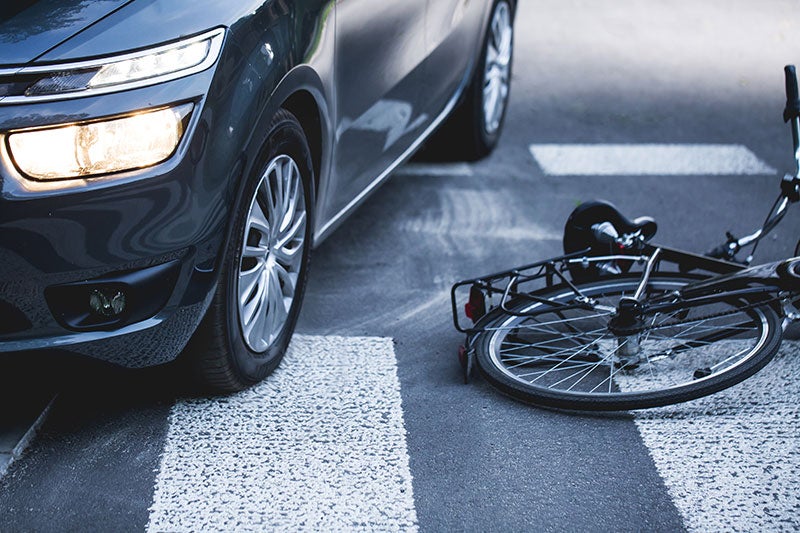
A driver passes you on Freeport Boulevard close enough to clip your handlebar, or cuts across the J Street bikeway to reach a garage. A Sacramento bicycle accident lawyer looks at that moment and asks which rule of the road the driver broke. California wrote many of those rules down, starting with Vehicle Code section 21760, the Three Feet for Safety Act.
That passing rule is one of several, and Sacramento riders need every one of them. State Office of Traffic Safety figures for 2023 list 237 bicyclists among the people hurt or killed on City of Sacramento roads. Measured against the 14 other California cities with over a quarter million residents, that total ranked third worst. Countywide, the figure reached 529 riders, fourth worst of 58 counties.
Other sections of the Vehicle Code tell drivers how to enter a bike lane before turning, when a door may open into traffic and how to yield to an oncoming rider. This page takes those rules one at a time and shows how a broken rule becomes proof of fault. It also covers what insurers argue back about helmets, lights and e-bikes, plus the trail rules on the American River Parkway.
Christopher L. Kreeger has held his California law license since 1990, and he may also appear in the federal Eastern District of California and before the Ninth Circuit. In 2003, he presided over the Capitol City Trial Lawyers Association. Avvo rates him 10.0 Superb, and he meets injured riders at the firm’s main office in Roseville.
Reach Kreeger Law Firm at (916) 782-8400 for a free consultation if a car struck you on your bike anywhere in Sacramento. You owe no attorney fee unless the firm recovers compensation for you, and you owe nothing for advanced costs when nothing is recovered.
How a Sacramento Bicycle Accident Lawyer Uses the Rule the Driver Broke
At Kreeger Law Firm, a bike crash file opens with the Vehicle Code, because California evidence law gives a broken safety statute real weight. Evidence Code section 669 treats a person as careless, unless rebutted, when he or she breaks a statute and that violation injures someone. The harm also has to be the type the statute was written to prevent, suffered by someone in the group it protects.

Rules written for cyclists usually meet those last two conditions. Once the presumption applies, the driver has to show conduct that a prudent person wanting to follow the law would have chosen in the same spot. A driver who sideswipes you on Arden Way because he misjudged the gap will struggle to make that showing. How much the presumption moves a claim still depends on the evidence behind it, and no one can promise how a jury will weigh it.
The Same Presumption Can Work Against a Rider
Vehicle Code section 21200 gives a person on a bicycle the rights of a driver and most of a driver’s duties. That cuts both ways. A rider pedaling against traffic breaks section 21650.1, which requires bicycles on a roadway or shoulder to travel with traffic. Under California’s rule of pure comparative fault, the rider’s award shrinks by his or her share, but the claim survives. The real fight is usually over whether the rider’s violation caused the crash at all.
Collision Reports That Name No Violation
The traffic collision report usually lists a primary collision factor, often written as a Vehicle Code section. Officers fill in that box from what they see and hear at the scene, sometimes while the rider is in an ambulance. Section 669 asks whether the driver violated the statute, not whether an officer wrote a ticket. Video, witnesses and damage patterns can prove a violation the report missed. The report request process is laid out on the firm’s Sacramento car accident page.
How a Sacramento Bike Accident Attorney Proves an Unsafe Pass Under the Three Feet Law
(916) 782-8400
Call for a free consultation
How a Sacramento Bicycle Crash Attorney Proves a Right Hook or Left Cross
The driver pulls ahead of you, then turns right across your path at the next corner. Riders call it a right hook. Its reverse is the left cross, where an oncoming driver turns left in front of you. Both leave the rider almost no time to brake.
The usual excuse is that the rider came out of nowhere or was hidden behind a parked car. The Vehicle Code answers by telling the driver where to be and when to look. Section 22108 requires a turn signal during the last 100 feet before the turn. Section 22107 bars any turn until it can be made with reasonable safety.
Right Turns Across the Bike Lane Under Section 21717
Under Vehicle Code section 21717, a driver who has to cross an adjacent bike lane to turn must first drive into that lane and then turn from it. In practice, the driver merges into the bike lane behind any rider, the way a car would merge behind another car. A driver who turns from the traffic lane with a rider alongside has skipped that step.
The 200-Foot Merge Zone in Section 21209
Section 21209 keeps motor vehicles out of bike lanes except to park where allowed, to enter or leave the road, or to prepare for a turn within 200 feet of an intersection. A driver who enters the lane a full block early breaks section 21209. A driver who never enters it before turning across it breaks section 21717.
Turning Across Sacramento’s Protected Bikeways
The City of Sacramento has added parking-protected bikeways downtown and in Midtown, where parked cars sit between moving traffic and the bike lane. At corners and driveways, those cars can hide a rider from a turning driver. The city’s Central City Mobility Project responds in two ways that matter in a fault dispute.
Left-Side Bikeways on 9th, 19th, 21st, P and Q Streets
The city’s plan puts the protected bikeway on the left side of 9th, 19th, 21st, P and Q Streets to avoid bus stops. There, the turning conflict comes from drivers turning left across the bikeway. A driver who checked only the right side may miss the rider. Section 22107 still requires the turn to wait until it is safe, whichever side the bikeway sits on.
Turn Wedges and Parking Limits Near Driveways
The project adds turn wedges at intersections to slow vehicles turning across the bikeway. It also restricts parking near driveways and intersections so that drivers can see riders behind the parked cars. A car parked inside that restricted zone raises a second question about its owner. Photograph the curb paint and signs the same day.
Left Turns and Driveway Exits Into an Oncoming Rider
Section 21801 makes a left-turning driver give way to oncoming vehicles near enough to pose a hazard. Section 21200 gives a cyclist the same right of way, so the duty runs to riders. Drivers leaving a driveway owe a similar duty under section 21804, which covers all traffic. A driver nosing out of a strip mall on Northgate Boulevard who watches only for cars can still break that section.
Crossing With the WALK Signal Under Section 21456
Section 21456 now lets a cyclist facing a WALK signal ride across in its direction, unless a bicycle signal says otherwise. The rider must still yield to anyone already lawfully in the intersection. That answers a turning driver who claims the cyclist entered against the light. Section 21451 requires a driver turning on green to yield to traffic lawfully within the intersection.
What a Sacramento Cyclist Injury Lawyer Proves After a Car Door Crash
How E-Bike Classes Shape the Case for a Sacramento Bicycle Accident Lawyer
Vehicle Code section 312.5 defines an electric bicycle as a bicycle with fully operable pedals and a motor of no more than 750 watts. Its rider follows the same bicycle rules that start at section 21200, so every rule above protects e-bike riders too. Section 24016 adds that an e-bike is not a motor vehicle, and its rider is exempt from the license, registration and insurance rules.
An adjuster who sees an e-bike often assumes the rider was going too fast. Take a class 2 rider struck by a driver turning left on Franklin Boulevard. The insurer will ask how fast the bike was moving, and the answer may sit in the bike’s display or its app data. A rider within the class limit and the posted speed has a solid reply.
Class 1, Class 2 and Class 3 Under Section 312.5
Class 1 e-bikes help only while the rider pedals and stop assisting at 20 mph. A class 2 bike has a throttle that can move it without pedaling, also capped at 20 mph. Class 3 covers pedal-assist bikes that reach 28 mph, and those bikes must carry a speedometer. Section 21213 bars riders under 16 from class 3 bikes and requires every class 3 rider to wear a helmet. Photograph the class label the manufacturer attached.
When a Modified E-Bike Is No Longer an E-Bike
Section 312.5 now excludes a machine modified to exceed 20 mph on motor power alone, to put out more than 750 watts or to run without pedals. Section 24016 separately bars tampering that changes an e-bike’s speed capability. Defense lawyers now inspect the controller, the motor and the label to see whether the bike still fits the definition. Keep the bike exactly as it was after the crash.
Licensing and Insurance Rules for Faster Machines
A machine outside section 312.5 may qualify as a moped, which section 406 limits to 30 mph, or as a motorcycle. Either category can bring license, registration or insurance requirements the rider may not have met. Sacramento County calls pedal-free e-motos electric motorcycles that need licensing and registration.
The Pain and Suffering Bar in Civil Code Section 3333.4
Civil Code section 3333.4 bars an operator who cannot show required financial responsibility from recovering pain and suffering damages. A rider on a true e-bike has a strong argument that the rule does not apply, because section 24016 frees e-bike riders from those laws. A rider on a machine that counts as a motorcycle may not. Medical bills and lost wages stay recoverable either way.
Your Own Auto Policy When You Were on a Bike
Uninsured motorist coverage on your car policy can follow you onto a bicycle. Insurance Code section 11580.2 counts the named insured as an insured, along with household relatives while in a motor vehicle “or otherwise.” A claim against an unknown driver needs physical contact and a police report within 24 hours. A rider who swerved and never touched the car may not qualify, so a witness who can identify the driver or the plate matters. The firm’s video answer on using your own auto insurance after a bike crash covers the basics, and its page on Sacramento hit-and-run crashes covers drivers who flee.
Winning serious victories for our clients
- $6,000,000 Motorcycle Accident
- $5,000,000 Construction Site Accident
- $3,200,000 Rear End Collision
- $2,500,000 Apartment Fire Accident
- $2,500,000 Apartment Fire with Severe Burns
- $1,000,000 Rear End Freeway Collision
- $1,000,000 Rideshare Head-On Collision
- $1,000,000 Rideshare Accident with Back Injury
- $400,000 Pedestrian Hit in Crosswalk
- $300,000 Side Impact Collision
- $300,000 Big Rig Rear-Ended Passenger Vehicle
- $240,000 Motorcycle vs. Automobile
Past results do not guarantee or predict a similar outcome in any future case. Every case depends on its own facts and the law that applies to it.
Helmet, Light and Lane Position Defenses a Sacramento Bike Injury Attorney Answers
Meet Christopher Kreeger
Christopher L. Kreeger is a California native and an experienced personal injury attorney, dedicated to exclusively representing individuals seriously injured due to the carelessness and neglect of others.
Skipping a helmet does not make a rider responsible for a crash a driver caused. The helmet question goes to which injuries the crash produced, not to who caused the collision. Insurers raise it anyway, along with lane position and lighting, because each argument can shave a percentage off the claim.
Every one of these defenses needs proof that the rider’s choice made a difference. A missing rear light means little in a crash at noon. Lane position means little when the driver admits never seeing the bike. Pin the insurer to that causation question early.
California’s Under-18 Helmet Rule in Section 21212
Section 21212 requires anyone under 18 to wear a fitted, fastened helmet when riding a bicycle, nonmotorized scooter or skateboard on a street, bikeway or public trail. The rule also covers children in a bike seat or towed trailer. A violation carries a fine of no more than $25. The firm’s overview of California bicycle helmet laws covers fit and safety standards.
Adults on Regular Bikes and Class 1 or Class 2 E-Bikes
No California statute requires an adult to wear a helmet on a conventional bicycle or a class 1 or class 2 e-bike. The defense can still argue that a helmet would have reduced a head injury. That argument needs a physician or an engineer to tie the missing helmet to the specific injury. It has nothing to say about a broken wrist. Proof of head trauma is its own subject, covered in the firm’s material on traumatic brain injury cases.
Children and the Rebuttal in Section 669
A rider under 18 without a helmet broke section 21212, so the defense may invoke the same presumption against the child. Section 669 lets a child rebut it by showing the care children of similar maturity usually use. Office of Traffic Safety data for 2023 show 14 riders under 15 killed or hurt within Sacramento city limits, and 66 countywide.
Riding Away From the Curb Under Section 21202
Insurers like to say a rider should have been hugging the curb. Section 21202 requires a cyclist slower than traffic to ride as close as practicable to the right edge, but it lists exceptions. Riders may leave the edge when passing, when getting ready to turn left and when dodging parked cars or debris. The statute also covers a substandard width lane, meaning one too narrow for a bike and a car to share safely side by side. A rider who moves away from the edge of a lane that narrow is using an exception the statute spells out.
Lights and Reflectors After Dark Under Section 21201
A bike ridden in darkness needs a white front light visible from 300 feet and a red rear reflector or light visible from 500 feet. Section 21201 also calls for pedal and side reflectors, and e-bikes must carry the red rear reflector at all hours. A rider struck from behind on Fair Oaks Boulevard at dusk without a rear light will hear about it. The reply often lies in streetlight coverage and whether the driver was looking at a phone.
Sacramento Bike Trail and Parkway Crashes a Cycling Accident Attorney Investigates
The Jedediah Smith Memorial Trail runs along the American River Parkway, shared by riders, runners and equestrians. Sacramento County sets a 15 mph limit on the trail for every rider, whatever the bike can do. Inside the city, the Del Rio Trail adds 4.8 miles between Interstate 5 and Freeport Boulevard, running south from Land Park toward the Pocket and Meadowview.
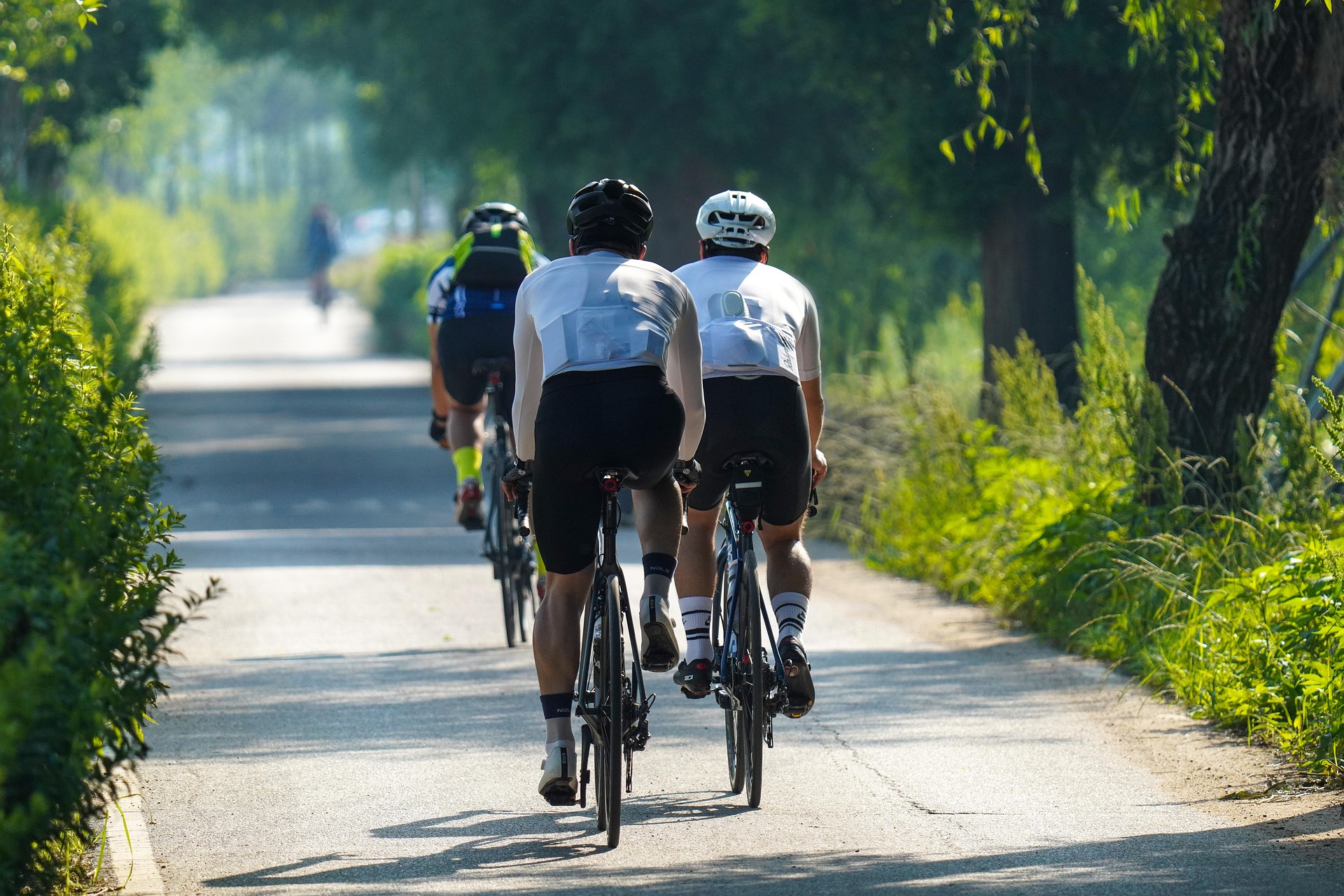
Trail crashes usually involve another rider, a loose dog or a fast e-bike. At street crossings, they involve drivers. The agency that owns the trail sits in a separate category, because California law shields it from many trail claims. Take a rider knocked down near Discovery Park by an e-bike passing on the right without warning. The county’s own trail guidance tells riders to pass on the left and call out first.
Trail Immunity Under Government Code Section 831.4
Government Code section 831.4 gives public entities immunity for injuries that arise from the condition of recreational trails, such as riding and hiking trails. In Farnham v. City of Los Angeles, decided in 1998, a California appeals court held that a paved Class I bikeway counts as a trail. Streets and Highways Code section 890.4 defines a Class I bikeway as a path separated from car traffic for bikes and pedestrians. The same reasoning would likely reach paved paths like the Jedediah Smith Memorial Trail and the Del Rio Trail.
Pavement Claims Against the County or City
A rider who hits heaved trail pavement usually runs into this immunity. Agencies raise the same defense against claims about a trail’s layout or signs. Subdivision (c) adds a warning duty for certain paved paths on easements leading to unimproved land, so the land records can matter.
Collisions the Immunity Does Not Cover
The immunity covers the trail’s condition, not the conduct of the people on it. A cyclist who slams into you at 25 mph broke the Parkway’s 15 mph limit. Sacramento County also bars class 3 e-bikes and e-motos from Regional Parks trails, including the Parkway, according to the county’s August 2026 trail safety notice. The other rider’s homeowners or renters policy may cover the loss.
Potholes and Broken Pavement in City Bike Lanes
A bike lane painted on a city street is part of the street, so a pothole claim there usually proceeds under Government Code section 835. That section requires proof that the agency created the dangerous condition or had notice of it early enough to repair it. Section 830.2 lets a court reject claims over trivial defects, so photograph the hole beside a ruler. A claim against the city must be presented within six months. If the city rejects it, the lawsuit goes to Sacramento County Superior Court. That court began hearing civil cases at its new Railyards courthouse, 500 G Street, in April 2026.
Ask a Sacramento Bicycle Accident Lawyer Which Rule the Driver Broke
Many bike crash claims trace back to one or two sentences of the Vehicle Code. Finding the right ones early, and saving the proof that a driver broke them, shapes everything that follows. Video gets overwritten, bikes get repaired and drivers’ memories improve in their own favor.
Chris Kreeger reviews bicycle injury cases for free. He will look at the crash report, your bike and the insurance available, then tell you plainly which rules apply. Kreeger Law Firm takes cases on contingency. The usual fee is one third of the recovery. For a client under 18, it drops to 25%. The firm advances case costs and takes them back from a recovery, apart from the fee. If nothing is recovered, those costs are not yours to repay.
Spanish-speaking staff are available when you call. Chris handles bike cases from riders across the Sacramento region, whether the crash happened on a downtown bikeway, a county trail or a suburban arterial.
If a driver broke a rule of the road while you were on your bike, talk to a Sacramento bicycle accident lawyer before you give the insurer a statement. Use the contact page or call (916) 782-8400 to start a free review with Kreeger Law Firm.
Other Injury Cases Chris Kreeger Handles in Sacramento
Kreeger Law Firm also represents people hurt in these Sacramento crashes and injury claims.