
Sacramento Truck Accident Lawyer
A big rig that hits you on Interstate 5 leaves more behind than wreckage. Federal law ordered the trucking company to create a paper trail about the driver, the truck and the trip, and some of it can be thrown away within months. A Sacramento truck accident lawyer reads that trail one record at a time, because each record points to a decision someone made before the crash. Most of those rules sit in the Federal Motor Carrier Safety Regulations, published in Title 49 of the Code of Federal Regulations.
This page works through those regulations one part at a time. Each section explains what a record proves, how long the carrier must keep it and which other companies it can implicate. With that map, you can ask for the right documents before the law lets them disappear.
Christopher L. Kreeger began practicing law in California in 1990, and injury claims are the center of his practice. Kreeger Law Firm takes truck crash cases across the Sacramento region from 3300 Douglas Boulevard, Suite 145, its main office in Roseville. His federal admissions include the Ninth Circuit and the Eastern District of California, which holds court in downtown Sacramento. That matters when an out-of-state carrier tries to move a case there from Sacramento County Superior Court under 28 U.S.C. section 1441.
If a commercial truck hurt you or took the life of someone in your family, call Kreeger Law Firm at (916) 782-8400 for a free consultation. Chris can tell you which carrier records to demand first and how much time each one has left.
Learn About Your Options After a Truck Accident
What a Sacramento Truck Accident Lawyer Looks for in a Motor Carrier’s Files
Two trucks can share a lane of Highway 99 near Elk Grove and answer to different rulebooks. A box truck delivering appliances inside Sacramento County may never leave California, while a tractor-trailer hauling tomatoes to Portland crosses into Oregon. At Kreeger Law Firm, a truck claim starts by sorting out which kind of trip was underway. That answer decides which records the carrier had to create and which agency can audit them.

Interstate carriers follow the federal rules in Title 49. Trucks that stay inside California follow the CHP’s rules in Title 13 of the California Code of Regulations. Those rules copy much of the federal system and change some of its numbers. Drivers hauling hazardous materials follow the federal hours rules even on in-state runs, under 13 CCR section 1212.5(b).
Truck Crash Deaths and Injuries in Sacramento County
The CHP’s Statewide Integrated Traffic Records System report for 2021 counts 70 people killed and 1,896 injured in Sacramento County truck crashes from 2017 through 2021. In 2021 alone, 14 people died and 511 were hurt, up from 305 injured the year before. The CHP counts trucks with two or more axles and truck tractors, and it leaves pickups and vans out of the totals. Families who lost someone in one of these crashes have rights of their own, explained in our guide to Sacramento wrongful death claims.
Freight Traffic on Interstate 5, Highway 99 and Interstate 80
Caltrans’ 2024 truck counts put about 25,300 trucks a day on Interstate 5 at Laguna Boulevard, roughly one vehicle in four. Highway 99 at Arno Road carried about 12,400 trucks a day, close to 14% of its traffic. Interstate 80 and Highway 50 carry freight between Sacramento, Reno and Lake Tahoe past CHP inspection stations. That mix of long-haul and local delivery traffic is why one crash can pull in an out-of-state carrier and a local subcontractor at once.
Driver Qualification Files a Sacramento Truck Crash Attorney Requests Under Part 391
Hours of Service Logs a Sacramento Truck Accident Attorney Preserves Under Part 395
Under 49 CFR 395.3, a property-carrying driver may drive up to 11 hours after 10 consecutive hours off duty. Driving must stop once 14 hours have passed since the driver came on duty, and 8 hours of driving require a 30-minute break. Weekly caps of 60 on-duty hours in 7 days or 70 in 8 days sit on top of those daily limits. A break of 34 hours or more can restart the week.

Logs are how anyone proves whether a driver stayed inside those numbers. Picture a driver who came on duty at 4 in the morning and was still driving at 7 that evening. Unless the log shows a break long enough to restart the clock, that driver had passed the 14-hour mark. Our page on truck driver fatigue accidents covers tired drivers in more depth.
California’s 12-Hour Intrastate Limit and the 2024 ELD Rule
Trucks that never leave California run on longer clocks. Under 13 CCR section 1212.5, an intrastate truck driver may drive up to 12 hours after 10 consecutive hours off duty, but not past the 16th hour on duty. The weekly cap is 80 on-duty hours in any 8 consecutive days. Since January 1, 2024, 13 CCR section 1213 has also required intrastate carriers to use electronic logging devices. Narrow exceptions cover trucks built before model year 2000 and a few other cases. So 12 hours behind the wheel may be legal for a Sacramento delivery driver and a violation for an interstate driver.
Electronic Logs and the Six-Month Retention Clock
Federal rules have required most interstate carriers to use electronic logging devices since December 18, 2017. Section 395.8(k) requires the carrier to keep each driver’s records of duty status and supporting documents for at least six months. California’s 13 CCR section 1234 sets the same six-month period for intrastate logs. After that, the regulations no longer require the carrier to keep them.
Supporting Documents That Can Contradict the Log
Section 395.11 tells carriers which supporting documents to keep, so investigators can check a log against independent records. A carrier does not have to keep more than eight of them for each driver for each 24-hour period. Each one must identify the driver or truck and show the date, place and time. Those details let anyone line the paper up against the electronic record.
Trip Paperwork and Expense Receipts
Bills of lading, itineraries and dispatch records show where a load started and when it was due. Expense receipts tied to on-duty time, such as fuel tickets, carry their own time stamps. A fuel receipt from a truck stop in Lodi at 2 in the morning does not fit a log showing the driver asleep in Sacramento. A mismatch like that is a reason to ask whether someone edited the log.
Fleet Messages and Driver Pay Records
Carriers that dispatch through a fleet management system must keep those electronic messages as supporting documents. Payroll records and settlement sheets belong on the list too. Pay records matter because a driver paid by the mile earns more by driving longer. A message from dispatch pushing a delivery time can explain why a tired driver kept going.
Why the Preservation Letter Has to Arrive Early
California’s general two-year filing deadline for an injury suit comes from Code of Civil Procedure section 335.1. The federal log rule guarantees only six months. A preservation letter sent soon after the crash tells the carrier a claim is coming and asks it to keep the logs, the ELD data and the supporting documents. If the carrier destroys them on purpose anyway, Evidence Code section 413 lets a jury weigh that willful suppression against it.
(916) 782-8400
Call for a free consultation
Inspection and Maintenance Records a Sacramento Big Rig Accident Lawyer Reviews
A driver writes up a soft brake pedal at the end of a shift. The shop marks the repair done, the truck goes back out, and two days later it cannot stop for slowing traffic on Highway 99 near Florin Road. Part 396 of the federal rules makes the carrier document each step in that story. The gap between what the driver reported and what the shop actually fixed is where a maintenance claim starts.
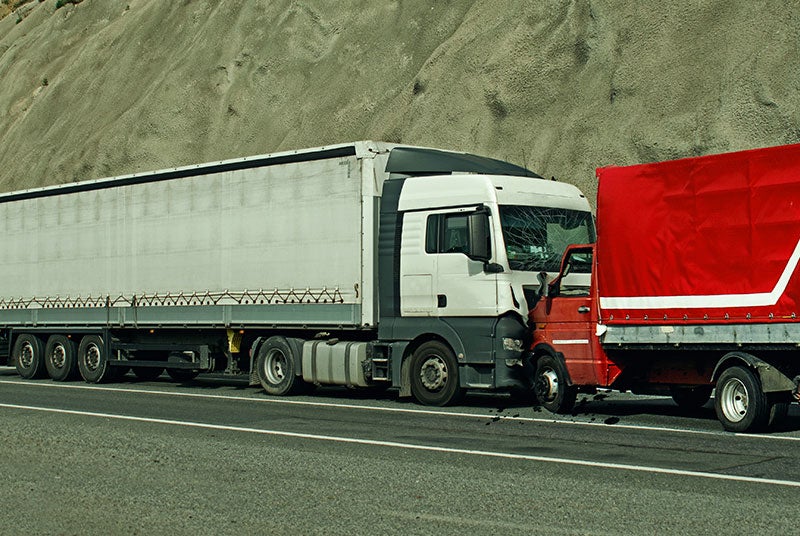
Section 396.3 requires every carrier to inspect, repair and maintain the vehicles it controls on a systematic schedule. The carrier must record each inspection and repair with its date and nature. Those records stay where the truck is housed or maintained for one year, and for six months after the truck leaves the carrier’s control.
Driver Vehicle Inspection Reports Kept Only Three Months
Section 396.11 requires a written report at the end of each day’s work on each vehicle. The report covers a set list of parts, including the service brakes, the tires and the coupling devices. A driver who finds no defect does not have to prepare one. When a report lists a defect, the carrier must certify that it was repaired or that no repair was needed before the truck runs again. The carrier then keeps the report for three months, and California’s 13 CCR section 1234 sets the same window for intrastate reports.
Annual Inspections, Brake Work and Outside Repair Shops
Section 396.17 bars a carrier from using a truck unless every listed component passed an inspection within the preceding 12 months. Under section 396.21, the carrier keeps that report for 14 months. Carriers may hire a commercial garage or a truck stop to do the work, and the shop’s own care then becomes part of the case.
Brakes carry an added rule. Under section 396.25, anyone responsible for a carrier’s brake inspections or repairs needs approved brake training or at least one year of brake experience. Brake failures get a closer look in our guide to tractor-trailer brake failure claims.
California’s 90-Day Inspections and the CHP BIT Program
California layers its own schedule on top. Vehicle Code section 34505.5 requires covered carriers to inspect each regulated vehicle at least every 90 days, including brake adjustment, tires and connecting devices. The carrier keeps those records at its terminal for two years. The CHP checks compliance through its Basic Inspection of Terminals program, known as BIT. Older materials call it the Biennial Inspection of Terminals, but since January 1, 2016, the CHP has picked terminals based on carrier safety scores instead of a fixed calendar.
Roadside Inspections at the Antelope Scales on Interstate 80
Caltrans lists a CHP commercial vehicle enforcement facility at Antelope on Interstate 80 in Sacramento County, with scales for both directions. Trucks coming down Highway 50 from the Sierra pass another at Camino in El Dorado County. A truck pulled in for a roadside inspection leaves behind a report that can list out-of-service violations. If the truck in your crash was written up in the months before, that report can show the carrier knew about the problem.
Checking a Carrier’s Safety Record by USDOT Number
FMCSA’s SAFER Company Snapshot lets anyone search a carrier by USDOT number, MC number or company name. The snapshot shows the carrier’s safety rating, if it has one, along with a summary of out-of-service inspections and crash information. Photograph the USDOT number on the side of the truck at the scene if you can. That number ties the truck in your crash to the federal record of the company operating it.
Drug and Alcohol Records a Sacramento Tractor-Trailer Crash Attorney Requests Under Part 382
Cargo Loaders, Brokers and Shippers a Sacramento Trucking Accident Lawyer Can Name
Many people assume a truck crash claim has two possible defendants, the driver and the trucking company. Federal rules give safety duties to others in the chain, including the company that loaded the trailer and the broker that booked the load. Civil Code section 1431.2 limits each defendant’s share of non-economic damages to its own percentage of fault, so every responsible company matters.
Take a flatbed whose steel coils shift on the ramp from Interstate 5 to Highway 50 and spill across two lanes. The shipper strapped the coils, the broker picked the carrier, and the carrier hired the driver. How fault divides among them depends on contracts, loading records and testimony that a lawyer has to work through.
Cargo Securement Duties Under Section 392.9
Section 392.9 bars a carrier from sending out a truck unless its cargo is properly distributed and secured under Part 393. The driver must check the load within the first 50 miles. After that, the driver re-checks it at each change of duty status or after 3 hours or 150 miles, whichever comes first. A sealed trailer the driver was told not to open is the exception, which shifts attention to whoever loaded it. Our page on unsecured cargo truck accidents covers those spills in more detail.
The Federal Ban on Pressuring Drivers Under Section 390.6
Shippers and receivers can push a driver too. Section 390.6 bars carriers, shippers and receivers from coercing a driver into breaking the safety rules, including the hours limits. Brokers and other transportation intermediaries fall under the same ban. The federal definition covers a threat to withhold business or work after the driver says a trip would break the rules. Texts and emails between dispatch and the customer can show who set an impossible schedule.
Freight Broker Claims After Montgomery v. Caribe Transport II
Brokers arrange freight without driving it, and for years they argued that federal law shielded them from injury suits. The Federal Aviation Administration Authorization Act, often called the FAAAA, preempts state laws related to the prices, routes and services of carriers and brokers. Its safety exception preserves a state’s safety authority with respect to motor vehicles. Federal courts split over whether that exception saved negligent selection claims against brokers.
The Unanimous Ruling on Negligent Carrier Selection
On May 14, 2026, the U.S. Supreme Court settled the question in its opinion in Montgomery v. Caribe Transport II. Writing for a unanimous Court, Justice Barrett held that a claim that a broker negligently hired a carrier falls within the safety exception. The injured driver there alleged the broker should have known from the carrier’s safety rating that hiring it was likely to lead to crashes. In a claim like that, the broker’s process for vetting carriers can now be examined.
Loads Booked Entirely Inside California
The ruling has a limit. A separate provision, 49 U.S.C. section 14501(b), preempts state regulation of intrastate broker services and has no safety exception. The Court said that provision was not before it. Justice Kavanaugh’s concurrence noted that all sides agreed the statute does not permit state tort suits against brokers for arranging intrastate transportation. A load brokered from Stockton to Sacramento may therefore face a defense that a load bound for Nevada would not. Where a court draws that line depends on the facts of the shipment.
Winning serious victories for our clients
- $6,000,000 Motorcycle Accident
- $5,000,000 Construction Site Accident
- $3,200,000 Rear End Collision
- $2,500,000 Apartment Fire Accident
- $2,500,000 Apartment Fire with Severe Burns
- $1,000,000 Rear End Freeway Collision
- $1,000,000 Rideshare Head-On Collision
- $1,000,000 Rideshare Accident with Back Injury
- $400,000 Pedestrian Hit in Crosswalk
- $300,000 Side Impact Collision
- $300,000 Big Rig Rear-Ended Passenger Vehicle
- $240,000 Motorcycle vs. Automobile
Past results do not guarantee or predict a similar outcome in any future case. Every case depends on its own facts and the law that applies to it.
Insurance Limits a Sacramento Truck Accident Lawyer Checks Under Part 387
How much insurance stands behind the truck that hit you? Take a for-hire carrier hauling ordinary freight across state lines in a truck rated at 10,001 pounds or more. Under 49 CFR 387.9, its federal floor is $750,000. Oil and many hazardous materials raise that floor to $1,000,000, and the most dangerous cargo, such as certain explosives, raises it to $5,000,000.

Those numbers are minimums, and the real limits come from the declarations pages, including any excess layers. Medical bill rules and your own uninsured motorist coverage work much as they do in Sacramento car accident claims, so this section sticks to what changes with trucks. What a policy will pay depends on the vehicles, the cargo and the contracts, and no one can put a figure on it before reading them.
California Minimums for Trucks That Stay in State
Vehicle Code section 34631.5 sets California’s own floor for motor carriers of property. Most carriers need a $750,000 combined single limit, which is one pool of money for injuries and property damage together. A carrier running only vehicles rated under 10,000 pounds needs just $300,000. Bulk petroleum haulers need more, and hazardous materials carriers must meet the federal amounts. A small delivery company in Rancho Cordova running cargo vans may therefore carry far less coverage than the tractor-trailer beside it.
What the MCS-90 Endorsement Adds to the Policy
One way an interstate carrier proves its coverage is a federal endorsement called the MCS-90, attached to its liability policy. In it, the insurer agrees to pay any final judgment against the carrier for public liability from negligent operation of its trucks, up to the required limit. No condition or exclusion in the policy relieves the insurer of that duty. The endorsement applies whether or not the truck is listed on the policy.
Suppose the carrier added a tractor last month and never told its insurer. The endorsement can still require the insurer to pay a final judgment up to the federal minimum. The carrier then has to reimburse the insurer for any payment the policy would not otherwise have covered. That dispute stays between those two companies.
Ask a Sacramento Truck Accident Lawyer to Demand the Carrier’s Records Now
Three months is all the federal rules guarantee for a driver’s daily inspection reports, and six months for the logs. Post-crash drug testing either happened within 32 hours or it never will. Each week that passes leaves a thinner record of what the carrier knew.
Kreeger Law Firm offers a free consultation to anyone hurt in a truck crash in the Sacramento region. Chris Kreeger can read the crash report, identify the carrier from its USDOT number and send a preservation demand for the files described here. He can also explain how each deadline applies to your crash.
The firm handles truck cases on a contingency fee and collects a fee only if it recovers money for you. It advances the case costs, and you owe nothing for them if the case ends without a recovery. Spanish-speaking staff can help when you call.
Was a truck involved in your crash on Interstate 5, Highway 99 or any Sacramento street? To have a Sacramento truck accident lawyer go after the carrier’s records, reach the firm on its contact page or call (916) 782-8400 today.
Other Injury Cases Chris Kreeger Handles in Sacramento
Kreeger Law Firm also represents people hurt in these Sacramento crashes and injury claims.