Sacramento Dog Bite Lawyer
Most dog bites happen close to home. The dog belongs to a neighbor, a relative or the family hosting a birthday party, and the owner’s insurer calls before the stitches come out. A Sacramento dog bite lawyer measures your facts against one short statute first. The text of California Civil Code section 3342 makes the owner answer for bites that happen in public or on property where you had a right to be. No proof of earlier aggression is needed.
That rule has edges, and the hard questions in a bite case sit at those edges. This page starts with what the statute makes automatic and moves outward one boundary at a time. It covers trespass, police dogs, knockdowns, landlords, caretakers, repeat biters and the insurance that usually pays.
Christopher L. Kreeger has practiced law since 1990 and focuses his practice on injury cases. Kreeger Law Firm works out of its main office in Roseville, on Douglas Boulevard, and takes dog bite cases across Sacramento County. Chris belongs to the Million Dollar Advocates Forum and holds an AV Preeminent rating from Martindale-Hubbell.
Call Kreeger Law Firm at (916) 782-8400 for a free consultation if a dog bit you or your child in Sacramento. Chris will tell you which rule fits what happened.
Learn About Your Options After a Dog Bite
What a Sacramento Dog Bite Lawyer Proves Under Civil Code Section 3342
At Kreeger Law Firm, the first question in a dog case is whether section 3342 applies at all. When it does, the proof gets short. California’s civil jury instruction for dog bites, CACI No. 463, asks whether the defendant owned the dog and whether it bit you in the right kind of place. It then asks whether you were harmed and whether the bite was a substantial factor in that harm. The owner’s carefulness never comes up.
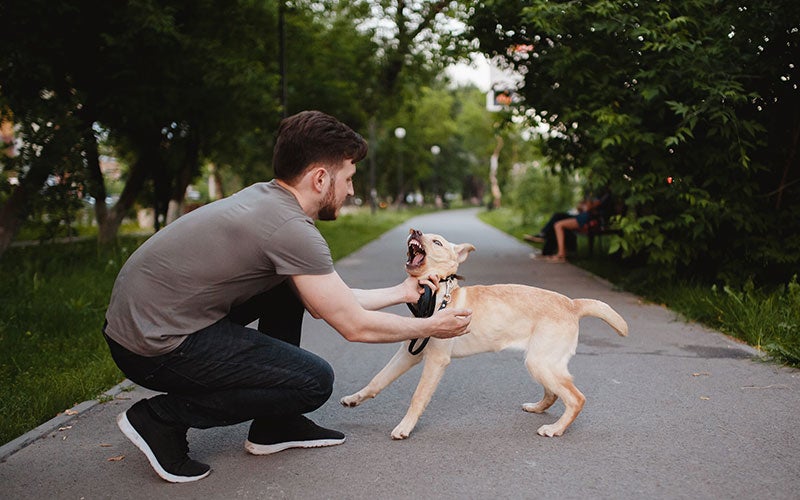
An owner also cannot defend the case by showing the dog had never bitten anyone. The common-law idea people call the one free bite rule gives a California owner no cover once section 3342 applies. Picture a dog that spent eight calm years on a Land Park porch before its first bite. Its owner is just as liable as the owner of a dog with a record.
Bitten in a Public Place Anywhere in Sacramento County
Sidewalks, parks and trails all count as public places. A runner bitten on the American River Parkway needs no invitation from anyone. Neither does a shopper bitten outside a store on Florin Road. The location element is met the moment the bite happens somewhere the public may go, so the case moves straight to who owned the dog and how badly you were hurt.
Lawfully on Private Property, Including the Owner’s Own Yard
Section 3342 also covers bites on private land, and it expressly includes the dog owner’s own property. The word that decides these cases is lawfully. The statute defines it two ways, and you need only one of them. Either a state or federal legal duty brought you onto the property, or the owner invited you there by words or by conduct.
A Duty Imposed by California Law or Postal Regulations
The duty route covers people whose work puts them on property whether the owner likes it or not. The statute names the laws of California and the postal regulations of the United States, which plainly reaches a letter carrier on a porch. Other workers can argue the same route. The answer depends on which legal duty they were performing when the dog bit.
Express and Implied Invitations
An express invitation is the easier one to prove. A text that says come over at six or a paid job inside the house will do. An implied invitation comes from conduct, such as an unlocked gate and a walkway leading to the front door. A delivery driver on that walkway has a stronger argument than one who opened a latched side gate.
What Counts as a Bite When the Skin Never Breaks
Johnson v. McMahan, a 1998 California appellate decision, settled this question. A volunteer was on a ladder fixing a swamp cooler when a five-month-old German shepherd leaped up and caught his trousers in its jaws. His skin stayed whole, and he fell. The court held that a bite had occurred and that the statute asks for nothing more. It added that the statute arguably reaches injuries from the fall.
(916) 782-8400
Call for a free consultation
Trespass, Provocation and K9 Limits a Sacramento Dog Attack Attorney Tests
How a Sacramento Dog Injury Lawyer Proves a Claim When There Was No Bite
A 65-pound dog tied to a 100-foot guy wire runs down a driveway and leaps on a woman visiting homes in the neighborhood. She lands on rocks and breaks her hip. Nothing bit her. Those are the facts of Drake v. Dean, a 1993 California appellate case, and section 3342 does not reach them.

A knockdown can do more damage than many bites, as that broken hip shows. Cyclists and runners also get hurt swerving away from a loose dog. Those claims run on common-law strict liability or negligence. Both require more proof than the statute, and both can reach people besides the owner.
Common-Law Strict Liability for a Dog With a Known Dangerous Tendency
This theory applies to anyone who owned, kept or controlled the dog. CACI No. 462 asks whether the dog had an unusually dangerous nature or tendency. It also asks whether the defendant knew or should have known about that tendency before the injury. A habit of jumping on people can qualify. In Drake, a witness testified the owner had admitted that exact habit, and the owner denied it.
Negligence When the Owner Failed to Control an Ordinary Dog
Drake’s lasting holding concerns negligence. The court said a keeper can be negligent even when the dog’s behavior is normal for its kind, if the harm was foreseeable and ordinary care would have prevented it. The trial judge had instructed the jury only on strict liability, and the appellate court reversed for that reason. Negligence cases tend to turn on fences, leashes and earlier warning signs.
Leash Rules and the Evidence Code Section 669 Presumption
Under Evidence Code section 669, breaking a statute, ordinance or regulation creates a presumption of negligence. The violation must cause the kind of harm the rule targets, to the kind of person it protects. A local leash or at-large ordinance can supply that rule. The owner can answer that presumption by showing reasonable care. Which ordinance applies depends on whether the dog got loose inside the city or in unincorporated Sacramento County.
Dogs That Chase Cyclists and Runners
A loose dog that sprints into a bike lane on Folsom Boulevard can cause a crash without ever touching the rider. The rider’s claim becomes a negligence case with a crash attached. Photos of the scene, a description of the dog and witnesses who saw it escape carry most of the proof. These cases often overlap with Sacramento bicycle accident claims.
Winning serious victories for our clients
- $6,000,000 Motorcycle Accident
- $5,000,000 Construction Site Accident
- $3,200,000 Rear End Collision
- $2,500,000 Apartment Fire Accident
- $2,500,000 Apartment Fire with Severe Burns
- $1,000,000 Rear End Freeway Collision
- $1,000,000 Rideshare Head-On Collision
- $1,000,000 Rideshare Accident with Back Injury
- $400,000 Pedestrian Hit in Crosswalk
- $300,000 Side Impact Collision
- $300,000 Big Rig Rear-Ended Passenger Vehicle
- $240,000 Motorcycle vs. Automobile
Past results do not guarantee or predict a similar outcome in any future case. Every case depends on its own facts and the law that applies to it.
Landlord and Caretaker Liability a Sacramento Dog Bite Attorney Can Pursue
What a Sacramento Animal Bite Attorney Does With Repeat Bites and Bite Reports
The first official record of most dog bites is the bite report. Sacramento County Animal Care Services says medical professionals must report animal bites, and the law requires every reported bite to be investigated. A bite investigation does not mean the county will impound the dog. Often the officer only checks that the dog’s rabies shots and license are up to date.
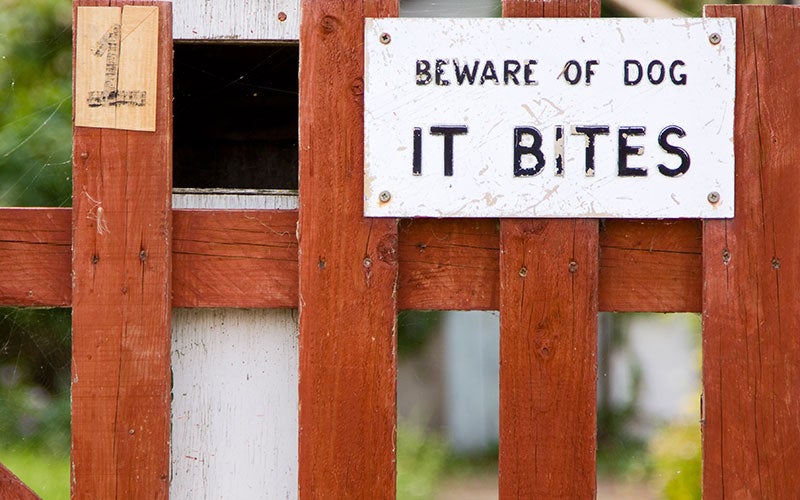
Those reports matter beyond public health. Say a dog bit a delivery driver in March and a neighbor’s child in October. The March report can support a court case about the dog, a dangerous dog finding and proof that the owner knew.
The Owner’s Duty After a First Bite
Civil Code section 3342.5(a) gives the owner of any dog that has bitten a person a duty to take reasonable steps to remove the danger to others. Reasonable steps might include a repaired fence, a muzzle on walks or keeping the dog away from visitors. An owner who changed nothing after the March bite has a hard time explaining October. That history supports the common-law knowledge claim.
A Court Order After Two Separate Bites
After a second separate bite, section 3342.5(b) lets any person, the district attorney or the city attorney sue the owner. The case asks whether the conditions behind the bites have changed enough to remove the danger. It belongs in the county where one of the bites happened. Here that means Sacramento County Superior Court, which has handled civil matters at its new 500 G Street courthouse in the Railyards since April 2026.
The judge can order the dog removed from the area or, if necessary, destroyed. This is a limited civil case about the dog, not a damages case. Subdivision (f) leaves the owner’s section 3342 liability untouched.
Potentially Dangerous and Vicious Dog Labels
The Food and Agricultural Code adds a separate administrative track. Under section 31602, an unprovoked bite causing a less severe injury is one route to a potentially dangerous dog finding. Section 31603 defines a vicious dog as one that, unprovoked, severely injures or kills a person. The county handles vicious dog filings through its field operations team, which you reach by calling 311.
Criminal Charges Under Penal Code Section 399
Penal Code section 399 targets an owner or keeper who knows an animal is mischievous and lets it run at large or keeps it carelessly. If the animal then kills or seriously injures someone who took reasonable precautions, criminal charges follow. A death is a felony. Serious bodily injury can be charged as a misdemeanor or a felony. A family that lost someone in an attack may also have a Sacramento wrongful death claim.
Reporting the Bite in Sacramento County or Inside City Limits
Where the bite happened decides which agency takes the report. Bites in unincorporated communities such as Arden-Arcade, Carmichael and Fair Oaks go to the county. Bites inside Sacramento city limits go to the city’s own animal care program. Several incorporated cities, including Elk Grove, Folsom and Citrus Heights, run separate animal services lines, which the county lists on its contact page.
Sacramento County Animal Care Services on Bradshaw Road
The county shelter is at 3839 Bradshaw Road, about a mile south of Highway 50 between Goethe and Kiefer. Bites to people are reported at (916) 368-7387, the 368-PETS line, by choosing option 2. The county’s If You Are Bitten by an Animal page lists what the investigator needs, including the owner’s address and a description of the dog. An officer then visits the owner to confirm the rabies vaccination.
Front Street Animal Shelter for Bites Inside City Limits
The City of Sacramento runs the Front Street Animal Shelter at 2127 Front Street, near Broadway. The city takes bite reports through an online animal bite form and through 311, which answers around the clock. If 311 cannot be reached, the city lists (916) 808-7387 as a backup number. Ask for the report number, because a lawyer will use it to request the investigation file.
The 10-Day Rabies Observation Under Title 17
California Code of Regulations, Title 17, section 2606 controls what happens to the dog itself. At the local health officer’s discretion, a dog that bites a person is held in strict confinement and watched for at least 10 days. A dog held at a shelter or veterinary hospital can leave after five days if the observing veterinarian certifies it shows no sign of disease. The regulation also forbids destroying a biting dog’s brain before the health department authorizes it.
Insurance Questions Sacramento Families Ask a Dog Bite Lawyer
Meet Christopher Kreeger
Christopher L. Kreeger is a California native and an experienced personal injury attorney, dedicated to exclusively representing individuals seriously injured due to the carelessness and neglect of others.
Homeowners insurers paid about $1.86 billion on dog bite and other dog injury claims in 2025, according to the Insurance Information Institute. California had 2,830 of those claims, more than any other state. The national average cost per claim was $65,450.
Those numbers describe a market, not your case. A national average says nothing about the policy behind the dog that bit you or the scar it left. No lawyer can put a value on a claim before reviewing both. The answers below address the insurance questions families raise first.
Which Policy Pays When a Neighbor’s Dog Bites?
The Insurance Information Institute says homeowner’s and renter’s policies typically cover dog bite liability up to the policy limit, commonly $100,000 to $300,000. The owner is personally responsible for any amount above that limit. When a tenant’s dog bites, the tenant’s renter’s policy is usually the first place to look.
Can an Insurer Refuse Coverage for Certain Breeds?
Yes. Some insurers refuse to cover certain breeds, and others decide dog by dog. After a bite, an insurer may raise the premium, drop the policy or exclude that dog going forward. An exclusion does not erase the owner’s liability under section 3342. It changes where the money would come from, which can mean the owner’s personal assets.
How Long Do You Have to Sue Over a Sacramento Dog Bite?
Injury lawsuits carry a two-year deadline, counted from the bite, in section 335.1 of the Code of Civil Procedure. A child’s own claim gets more time under section 352. A police dog bite claim against a public agency also has the shorter government claim step described above.
How Are Scars and Disfigurement Valued?
Dogs bite about 4.5 million people in the United States each year, most of them children, the Insurance Information Institute reports. The CACI verdict form for dog bite cases asks jurors for past and future noneconomic loss, including physical pain and mental suffering. A facial scar on a seven-year-old raises different questions than a healed scratch on an adult’s forearm. Its value depends on the person, the location and the medical opinions, so nobody can name a figure in advance. The firm’s page on dog bite settlement values in California explains the factors.
Talk to a Sacramento Dog Bite Lawyer About Where Your Case Falls
A dog bite claim rarely stalls on the bite itself. It stalls at an edge, such as a latched gate, a working K9 or a grooming counter where the leash had not changed hands. Finding that edge early tells you which evidence to save.
Kreeger Law Firm offers a free consultation to anyone hurt by a dog in Sacramento County. Chris Kreeger will review the bite report, your photos and the owner’s insurance information, then explain where your facts sit under California law. His fee is contingent, usually one third of any recovery, or 25% for a client under 18. No attorney fee is owed unless Chris recovers money for you. When a case ends without a recovery, the client owes nothing for the costs the firm advanced.
Bring the bite report number, the owner’s name and any photos of the injury to the first call. Spanish-speaking staff are available to help.
If a dog hurt you or your child, a Sacramento dog bite lawyer can review the claim. Use the contact page on the firm’s website or call (916) 782-8400 today.
Other Injury Cases Chris Kreeger Handles in Sacramento
Kreeger Law Firm also represents people hurt in these Sacramento crashes and injury claims.