Sacramento Motorcycle Accident Lawyer
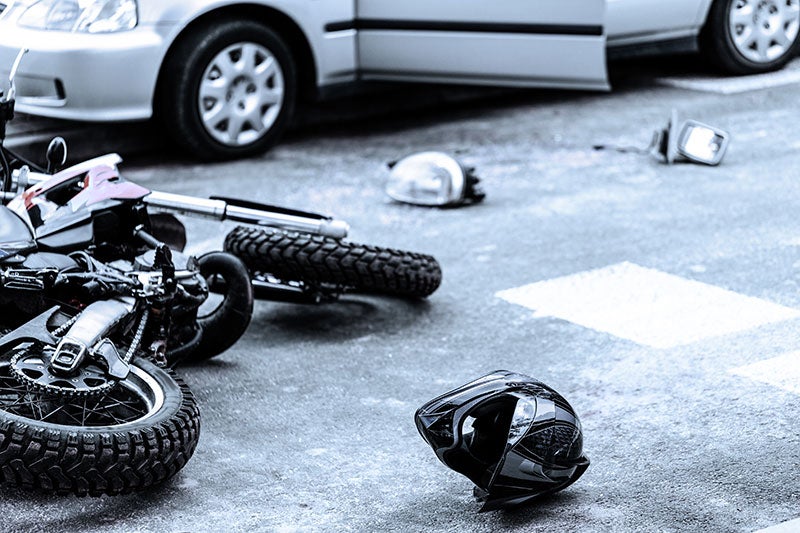
A pickup cuts left in front of you on Watt Avenue, and the bike goes down in the intersection. Within days, an adjuster asks whether you were speeding, splitting lanes or riding without proper gear. A Sacramento motorcycle accident lawyer tests each of those questions against the evidence before you answer them. The California Office of Traffic Safety counted 154 motorcyclists killed or injured in the City of Sacramento in 2023. Its 2023 ranking of Sacramento crash victims places the city fifth worst for riders in a group of 15 cities above 250,000 people.
Countywide, the same rankings list 565 riders killed or injured that year, eighth worst of California’s 58 counties. An injury claim for any one of those riders moves through a series of places. It begins on the stretch of road where the crash happened and passes through the scene, the trauma bay and the shop or salvage yard. Some claims finish at the new courthouse on G Street in the Railyards. This page follows that route and names the evidence and the arguments waiting at each stop.
Licensed in California since 1990, Christopher L. Kreeger later gained admission to the federal Eastern District and the Ninth Circuit. He practices alone under the Kreeger Law Firm name, based in Roseville on Douglas Boulevard, and takes motorcycle cases across the Sacramento region. The Multi-Million Dollar Advocates Forum counts Chris among its members, and so does the Million Dollar Advocates Forum.
If a driver’s mistake put you on the pavement, call Kreeger Law Firm at (916) 782-8400 for a free consultation about your crash. The firm takes its fee only from money it recovers for you, and riders whose cases recover nothing receive no bill for costs.
Where Sacramento Motorcycle Crashes Happen and What an Injury Attorney Checks
Every rider’s claim at Kreeger Law Firm starts with the exact place the bike went down. Lane width, pavement condition, sight lines and traffic speed all leave evidence that fades fast. A repaving crew can erase a pothole within weeks. A gas station camera can record over the intersection in days.
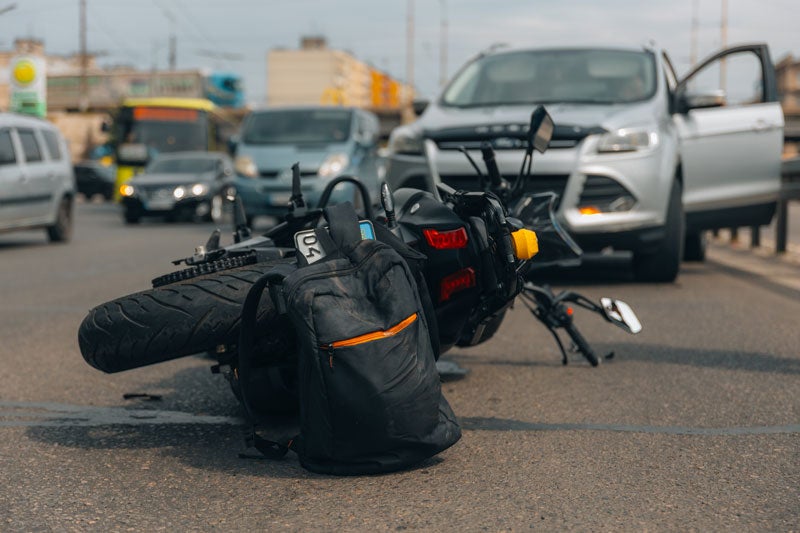
The location also decides which agency writes the report, which public entity maintains the road and which county court could hear the case. Riders around Sacramento cover many road types in a single weekend. A Saturday loop might run from city streets onto Highway 50, up into El Dorado County and back down Interstate 80. Each type of road raises its own fault question.
Freeways and Highways Riders Use Around Sacramento
In a July 2024 review of federal fatality data, The Sacramento Bee counted road deaths across the county from 2020 through 2022. Highway 160 had 21, Highway 50 had 20 and Interstate 80 had 16. Those totals cover drivers, passengers and people on foot as well as riders. They still show which corridors produce the worst crashes, and each one changes character as it leaves the city.
Highway 50 From Rancho Cordova to Echo Summit
Highway 50 leaves downtown as the El Dorado Freeway and carries riders through Rancho Cordova, Folsom and El Dorado Hills toward Placerville. The divided freeway ends at the east edge of Pollock Pines. Past Ice House Road, the highway is mostly two lanes and follows the South Fork of the American River up its canyon to Echo Summit at 7,382 feet. On the freeway stretch near Folsom, fault disputes often center on merges and lane changes. On the mountain miles, the questions shift to centerline crossings on curves, gravel near turnouts and drivers passing where the view ahead is short.
Interstate 80, Business 80 and Highway 160 Near the American River
Interstate 80 runs northeast through North Highlands, Citrus Heights, Roseville and Rocklin, then climbs past Auburn toward Donner Summit. Business 80, the Capital City Freeway, crosses the American River before it rejoins Interstate 80 northeast of downtown. Highway 160 comes in two pieces. Its northern piece, the North Sacramento Freeway, starts at the 16th Street Bridge over the American River and ends at Business 80 near Arden Way. Its southern piece follows Sacramento River levees through the Delta before entering the city as Freeport Boulevard. Stop-and-go traffic on these freeways is the exact setting the state’s lane splitting law describes.
Does Lane Splitting Put a Sacramento Rider at Fault?
Not by itself. Under Vehicle Code section 21658.1, in effect since January 1, 2017, lane splitting means a two-wheeled motorcycle traveling between rows of vehicles that share a lane, moving or stopped. The statute lets the CHP publish educational guidelines, and those tips set no speed limit. The California Highway Patrol motorcyclist safety page warns that danger rises with overall speed and with the speed gap between the bike and traffic. It also says riding on the shoulder is illegal and is not lane splitting at all.
That leaves a fight about reasonableness. An adjuster may argue you split too fast, beside a big rig or in a gap too narrow for the bike. Traffic speed at the time, dashcam video and measured lane widths answer those points. Our page on Sacramento lane-splitting motorcycle accident claims covers that dispute in detail.
Left-Turn Crashes on Florin Road, Watt Avenue and Power Inn Road
Vehicle Code section 21801 requires a driver turning left to yield to oncoming traffic close enough to be a hazard, and the duty lasts until the turn can be made safely. Drivers who break that rule often say they never saw the motorcycle. That statement describes the mistake rather than excusing it. The Bee’s count found 17 deaths on Florin Road over the same three years, with 10 each on Watt Avenue and Power Inn Road. Wide arterials like these force a turning driver to judge several lanes of oncoming traffic at once, and a single headlight is easy to misjudge.
Pavement Defects and Claims Against Caltrans or the City
A motorcycle reacts to surface problems that a car rolls over. Loose gravel, an uneven edge between lanes, a steel trench plate or a deep pothole can throw a rider with no other vehicle involved. Government Code section 835 allows a claim against a public entity when its property was in a dangerous condition and the entity created the hazard or knew about it in time to fix it. Caltrans maintains state highways such as Highway 50, while the city or county maintains local streets. Those claims run on shorter deadlines, so photograph the defect on the first day.
How a Sacramento Motorcycle Injury Lawyer Reads the CHP or Police Crash Report
(916) 782-8400
Call for a free consultation
How a Sacramento Motorcycle Accident Attorney Uses Trauma Center Records
The most seriously hurt riders in the Sacramento area go by ambulance to one of four trauma centers. On Stockton Boulevard, UC Davis Medical Center runs inland Northern California’s one Level I trauma center, and it takes adults and children from 33 counties. The county’s system adds three Level II centers. Carmichael’s Mercy San Juan Medical Center and Kaiser Permanente’s South Sacramento hospital sit inside the county, while Sutter Roseville Medical Center sits just over the Placer County line.

Records from that first day often carry more weight than any later summary. They show how you arrived, what the scans found and what the trauma team saw on your skin and limbs. They also hold the first written note about your helmet. Request the full chart, including imaging reports and nursing notes, not just the discharge papers.
The Ambulance Report and the First Helmet Note
Paramedics complete a patient care report before the trauma team takes over. The national EMS data standard gives them a safety equipment field with entries for a helmet, eye protection and protective clothing. That entry may come from a bystander, a quick glance or a guess made while treating you. Compare it with the helmet itself and with photos from the scene. A wrong entry saying you wore no helmet can follow a claim for months unless someone corrects it with proof.
Does a Missing Helmet Reduce a Sacramento Rider’s Claim?
California requires every motorcycle rider and passenger to wear a helmet under Vehicle Code section 27803. A rider who skipped the helmet broke that law, but the violation does not mean the rider caused the crash. A helmet cannot stop a driver from turning left in front of you. The argument goes to damages, and it reaches only the injuries a helmet could have prevented or reduced.
What Section 27803 Counts as Wearing a Helmet
The statute requires a helmet that meets the federal standard adopted under Vehicle Code section 27802. The helmet has to sit on your head with the straps fastened. It also has to fit snugly enough that it does not shift much in any direction. Our post on California motorcycle helmet laws covers tickets, fines and helmet choices.
How the Defense Has to Prove a Helmet Argument
California’s civil jury instructions have no form written for helmets. The closest model is CACI 712, the seat belt defense. It makes the defense prove a careful person would have used the safety device and that the injuries would have been avoided or less severe with it. Courts applying that rule, starting with Truman v. Vargas in 1969, have said the injury question usually needs testimony from a qualified witness such as a biomechanical engineer.
Injuries a Helmet Could Not Have Changed
A helmet protects the head and part of the face. It does nothing for a shattered tibia, a torn shoulder or road rash across the back. Even when a jury accepts the helmet argument, the reduction should touch only the share of damages tied to the head injury. How large any reduction might be turns on medical proof that has to be reviewed case by case.
Novelty Helmets and Missing Certification Labels
A thin novelty helmet without federal certification invites the same attack as riding bareheaded. The certification label inside the shell, the model number and the receipt become evidence. Keep the helmet you wore, because its cracks and scuffs also show where your head struck.
Rider Injuries Recorded in the Trauma Bay
Riders absorb a crash with their bodies, so the injury pattern looks different from a typical car crash. A single trauma chart can list a head injury, broken bones and deep skin wounds at once. Each one brings its own follow-up care, its own bills and its own proof problems. Two injury types deserve a closer look in rider cases.
Brain Injuries Behind an Intact Helmet
A helmet lowers the risk of a skull fracture, but the brain can still move hard inside the skull. A rider can leave the emergency room with a clean scan and still develop memory, sleep and mood problems weeks later. Neurology and neuropsychology records are what connect those symptoms to the crash. A Sacramento traumatic brain injury claim often depends on that follow-up.
Road Rash, Degloving and Skin Grafts
Sliding across asphalt can strip skin away from the tissue beneath it, an injury doctors call degloving. Deep road rash may need debridement, skin grafts and months of wound care. Infection and permanent scarring can follow. Photos taken every few days give a jury a record that no medical bill can show.
Winning serious victories for our clients
- $6,000,000 Motorcycle Accident
- $5,000,000 Construction Site Accident
- $3,200,000 Rear End Collision
- $2,500,000 Apartment Fire Accident
- $2,500,000 Apartment Fire with Severe Burns
- $1,000,000 Rear End Freeway Collision
- $1,000,000 Rideshare Head-On Collision
- $1,000,000 Rideshare Accident with Back Injury
- $400,000 Pedestrian Hit in Crosswalk
- $300,000 Side Impact Collision
- $300,000 Big Rig Rear-Ended Passenger Vehicle
- $240,000 Motorcycle vs. Automobile
Past results do not guarantee or predict a similar outcome in any future case. Every case depends on its own facts and the law that applies to it.
How a Sacramento Motorcycle Accident Lawyer Values a Damaged Bike, Custom Parts and Gear
Taking a Motorcycle Claim to Court With a Sacramento Motorcycle Accident Lawyer
The courthouse shapes a claim long before anyone files in it. Sacramento County Superior Court moved its civil operations in April 2026 to the Railyards, where its new Tani G. Cantil-Sakauye Sacramento Superior Courthouse opened on G Street. Civil papers there are filed electronically, a rule the court adopted in January 2024. Adjusters price a claim partly on how they expect a local jury to see the rider.

That is where bias against motorcyclists becomes a practical problem. Some jurors assume riders are reckless before they hear a word of testimony. A well-prepared case answers that assumption with evidence about lane position, speed and the other driver’s choices. Whether a case should be filed, and when, depends on the evidence and on the deadlines below.
Deadlines for Filing a Sacramento Motorcycle Injury Lawsuit
Two years is the limit for a rider’s injury lawsuit in California, counted from the crash date, as Code of Civil Procedure section 335.1 provides. Claims for the bike and gear get three years under section 338. A claim against Caltrans, the city or the county first needs a written government claim, usually within six months. When a rider dies, the family’s Sacramento wrongful death claim runs on its own two-year clock from the date of death.
Which County Hears a Crash on Highway 50 or Interstate 80?
Code of Civil Procedure section 395 makes two counties proper for an injury case. One is the county where the injury happened. The other is the county where a defendant lives when the suit is filed. A rider hit near Placerville by a driver from Rancho Cordova could file in El Dorado County or in Sacramento County. A crash near Auburn raises the same choice with Placer County Superior Court, and jury pools, court calendars and witness travel all factor into the decision.
How Rider Bias Is Tested Before a Sacramento Jury
California juries decide fault under pure comparative negligence, the rule from Li v. Yellow Cab Co., a 1975 California Supreme Court decision. A jury can assign part of the blame to the rider and still award damages, reduced by that share. Bias pushes the rider’s share upward when jurors start from a stereotype. Two parts of a trial give a rider room to push back.
Questioning Jurors About Motorcycles Under Section 222.5
Code of Civil Procedure section 222.5 gives each side’s lawyer the right to question prospective jurors directly in a civil trial. The judge has to allow liberal and probing questions aimed at uncovering bias. That opens the door to asking who rides, who has lost someone in a crash and who thinks lane splitting should be banned. A juror who cannot set those views aside can be challenged.
How a Rider’s Share of Fault Changes the Award
Suppose a jury decides a rider carries 20% of the fault for drifting toward the lane line, and the driver who turned left carries 80%. The rider’s award drops by 20%, and the driver remains responsible for the rest. Every percentage point moves real money, so the evidence gathered on the road and at the scene matters again in the courtroom. What share a jury assigns depends on facts that nobody can predict from the outside.
Start Your Claim With a Sacramento Motorcycle Accident Lawyer Today
The bike will not sit at the tow yard forever, and the gouge marks on the road will not survive many rainstorms. Each place your claim passes through holds evidence on its own schedule. A call this week keeps more of that evidence within reach.
Avvo rates Chris Kreeger 10.0, or Superb, and Martindale-Hubbell rates him AV Preeminent. He will review the crash report, the trauma records and the photos of your bike, then explain where your claim stands. The consultation is free, and Spanish-speaking staff can help with the call.
Kreeger Law Firm charges a contingency fee, usually one third of what it recovers. Clients under 18 pay a 25% fee instead. The firm fronts the case costs and takes them back from any recovery, apart from its fee. If the case ends with no recovery, the firm collects no fee and absorbs those costs.
To have a Sacramento motorcycle accident lawyer look at your claim, call (916) 782-8400 or tell the firm about the bike and the crash on its contact page.
Other Injury Cases Chris Kreeger Handles in Sacramento
Kreeger Law Firm also represents people hurt in these Sacramento crashes and injury claims.