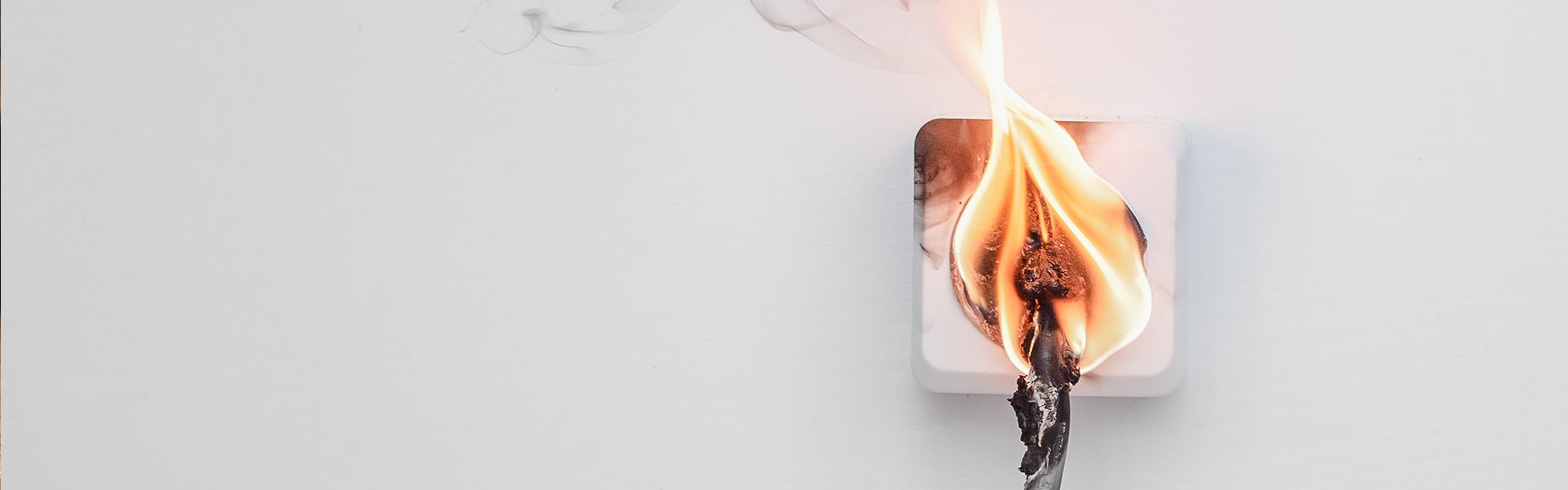
Sacramento Product Liability Lawyer
The charger that melted, the ladder that folded or the pressure cooker lid that blew off is now the most valuable evidence in your claim. A Sacramento product liability lawyer builds the case around that object, because California lets you sue over a defective product without proving the company was careless. That rule comes from the California Supreme Court’s 1963 opinion in Greenman v. Yuba Power Products, which made manufacturers strictly liable for defects that injure people.
Strict liability removes one burden and leaves another. You still have to show that the product was defective and that the defect caused your injury. Most of that proof comes from the item, its box and manual, and the records that follow it. This page follows the product from the injury through recall checks and lab testing to the legal theories and the courthouse.
Christopher L. Kreeger has been a member of the State Bar of California since 1990. He is also admitted to the Eastern District of California, the federal trial court that hears product cases a manufacturer removes from Sacramento County, and to the Ninth Circuit. His Martindale-Hubbell rating is AV Preeminent. Kreeger Law Firm’s main office is in Roseville, and the firm takes product injury cases throughout the Sacramento region.
If a defective product injured you or your child anywhere in Sacramento County, call Kreeger Law Firm at (916) 782-8400 for a free consultation. Keep the product in your own possession until you make that call.
What a Sacramento Product Liability Lawyer Does With the Product First
Where is the product right now? At Kreeger Law Firm, that question comes early in a product injury consultation, often before medical bills or insurance. A defect claim rises or falls on physical proof. If the item is gone, altered or back with the company that made it, the defect gets much harder to prove.
Picture a space heater that scorched a bedroom wall in a Natomas apartment. The landlord wants it in the dumpster, and the manufacturer’s hotline offers a refund once the unit ships back. Either path can destroy the evidence. How much that loss would hurt a claim turns on what else documents the failure, and only a review of the facts can answer that.
Securing the Item, Its Packaging and Its Paperwork
Store the product somewhere dry and secure, in the condition it was in when it failed. Do not repair, clean or test it yourself. Keep loose pieces and fragments, even when they look worthless, because an engineer may need to fit them back together. A swollen or burned lithium-ion battery needs special handling, so ask before you bring one back indoors.
Labels, Manuals and Date Codes Are Evidence Too
The warning label and the instruction manual become exhibits in a failure-to-warn claim. The date code or lot number on the housing tells an engineer which production run your unit came from. Your receipt or order history names the seller, and California law can make that seller answer for the defect. Keep all of it in the same box as the product.
Photographs Before Anyone Moves or Cleans It
Photograph the product where it failed before anyone touches it, then photograph the room or roadway around it. Take close shots of the serial label, burn marks and cracks. Short video from each side lets an engineer see the item as you found it. Your phone also stamps a date and time on each image.
Why the Manufacturer Should Not Get the Product Back
A customer service agent may promise a refund or a replacement once the unit is shipped back for evaluation. Your own homeowner’s or auto insurer may also send an investigator who wants the item for its own claim against the maker. Once the product leaves your control, you no longer decide who tests it or whether it survives. A joint inspection lets every side examine the same item at the same time.
What Happens When the Product Is Lost or Destroyed
California does not allow a separate lawsuit against a party that intentionally destroyed evidence when the loss was known before trial. The California Supreme Court settled that in Cedars-Sinai Medical Center v. Superior Court, a 1998 decision. The remedies come inside the injury case. Under Evidence Code section 413, a jury may infer that destroyed evidence would have hurt the party who destroyed it. Those rules can also be turned against an injured person who threw the product away.
Recall Records a Sacramento Defective Product Attorney Checks
(916) 782-8400
Call for a free consultation
How a Sacramento Product Injury Lawyer Gets the Evidence Tested
The plaintiff in Greenman got a Shopsmith combination power tool as a Christmas gift in 1955. Later, a piece of wood flew out of its lathe and struck his forehead. At trial, the witnesses he called testified that the set screws holding the machine together were inadequate. Ordinary vibration let the tailstock move away from the wood. That proof came from people who had studied the machine.

Testing follows the same logic today with better tools. The order matters, because some tests change the product forever. ASTM E1188 is a published practice for how technical investigators collect and preserve physical items. ASTM E860 covers examining and testing items involved in litigation, including destructive testing. A custody log records who held the item, when and where.
Non-Destructive Inspection Comes First
The first inspection leaves the product exactly as it was found. An engineer documents the outside, measures parts against published specifications and studies fracture surfaces or burn marks under magnification. Nothing is taken apart or powered on at this stage unless every party agrees. The record from this step, photographed throughout, becomes the baseline that every later test is checked against.
CT Scans and X-Rays of Sealed Housings
Battery packs, power tools and medical implants often come in sealed housings. Industrial CT scanning and X-ray imaging let an engineer see inside without opening the case. A scan can reveal a shorted cell, a loose connection or a missing part. Those images also help decide whether destructive testing is worth its cost.
Exemplars From the Same Product Line
An exemplar is an unused unit of the same model, ideally from the same production run. A crack, a thin weld or a wrong part found only in your unit points toward a manufacturing defect. A flaw found in every exemplar points toward the design itself. The date code you saved in the first week is what makes this comparison possible.
Destructive Testing Under a Written Protocol
Cutting open a battery pack or sectioning a cracked bracket changes the evidence permanently, and the change cannot be undone. Before that happens, every party with a stake in the case needs notice and a chance to attend. A written protocol agreed in advance names the lab, the steps and who keeps each piece afterward. Skipping that process invites the spoliation remedies described above.
Inspection Demands Under Code of Civil Procedure Section 2031.010
Once a lawsuit is filed, California Code of Civil Procedure section 2031.010 lets a party demand to inspect, test or sample tangible things another party controls. That works in both directions. The manufacturer can demand access to your product, and you can demand access to its retained samples, returned units and test fixtures.
Preserving Evidence Before Suit Under Section 2035.010
Sometimes evidence is at risk before anyone has filed a case. Section 2035.010 lets a person who expects to be a party to a California lawsuit seek discovery to preserve evidence for later use. It cannot be used to learn whether you have a claim or to identify who you might sue.
Who Pays for Engineering Inspections and Lab Work
Engineering, lab and imaging work all cost money. Kreeger Law Firm takes product cases for a percentage of the recovery, usually one third, or 25% when the injured client is a minor. Testing bills are case costs, which the firm pays as the case goes and takes from a recovery apart from its fee. Without a recovery, those costs are not passed on to you. The firm’s answers to common fee questions cover the remaining details.
Defect Claims a Sacramento Product Liability Lawyer Builds From Test Results
Companies a Sacramento Defective Products Attorney Can Hold Liable
Your receipt may name a company that answers for the defect alongside the manufacturer. California extended strict liability beyond the maker in 1964, and later cases carried it to online sellers. A product can pass through a parts supplier, a distributor and a store before it reaches you. Packaging, shipping labels and order history usually show who those companies were.

Picture an e-bike bought from a shop on Fair Oaks Boulevard, with a battery pack built overseas. If the battery ignited in a Carmichael garage, the shop, the bike brand and the battery maker may all belong in the case. Naming a California seller can also affect which courthouse hears it. Whether each company is liable turns on its role and the evidence about it.
Retailers and Dealers Under Vandermark v. Ford Motor Co.
Vandermark involved a new Ford sold by Maywood Bell Ford, whose master cylinder made the brakes apply on their own. The California Supreme Court held the dealer strictly liable along with Ford, because retailers are part of the enterprise that produces and markets goods. A retailer may be the only member of that chain an injured person can reach. The same chain answers to a family in a Sacramento wrongful death case when a defect causes a death.
Online Marketplaces After Bolger v. Amazon.com
In 2020, a California Court of Appeal applied similar reasoning to Amazon. A buyer ordered a replacement laptop battery from a third-party seller called E-Life, which Amazon stored and shipped through its Fulfilled by Amazon program. Months later, the battery exploded and burned her. The court held Amazon subject to strict liability because it placed itself between the seller and the buyer in the chain of distribution.
Winning serious victories for our clients
- $6,000,000 Motorcycle Accident
- $5,000,000 Construction Site Accident
- $3,200,000 Rear End Collision
- $2,500,000 Apartment Fire Accident
- $2,500,000 Apartment Fire with Severe Burns
- $1,000,000 Rear End Freeway Collision
- $1,000,000 Rideshare Head-On Collision
- $1,000,000 Rideshare Accident with Back Injury
- $400,000 Pedestrian Hit in Crosswalk
- $300,000 Side Impact Collision
- $300,000 Big Rig Rear-Ended Passenger Vehicle
- $240,000 Motorcycle vs. Automobile
Past results do not guarantee or predict a similar outcome in any future case. Every case depends on its own facts and the law that applies to it.
Where a Sacramento Product Liability Attorney Files a Defective Product Lawsuit
Meet Christopher Kreeger

Christopher L. Kreeger is a California native and an experienced personal injury attorney, dedicated to exclusively representing individuals seriously injured due to the carelessness and neglect of others.
A product claim filed in state court goes to Sacramento County Superior Court, which moved its civil docket to a new Railyards courthouse in April 2026. Civil papers have gone to the court electronically since January 2024. A product case filed in that court does not always stay there.
When you sue an out-of-state manufacturer in Sacramento, it may try to remove the case to the Eastern District of California, which sits in the Robert T. Matsui United States Courthouse in downtown Sacramento. The move matters because federal court applies its own rules of evidence.
Removal to the Eastern District of California
Federal diversity jurisdiction covers suits between citizens of different states when more than $75,000 is in controversy, not counting interest and costs. A manufacturer that removes a case files notice in federal court, and the injured person can ask the federal judge to send it back. Two parts of federal law shape that fight, and both turn on who was sued.
Citizenship of Every Party in the Case
Federal courts read the diversity statute to require complete diversity, meaning no plaintiff can share a home state with any defendant. A Sacramento resident who properly sues a California store lacks complete diversity with it. The manufacturer may argue the store was named only to block removal, and a federal judge decides that question.
The Forum Defendant Rule and a California Seller
A second rule matters when the injured person lives outside California, such as a Reno visitor hurt in Sacramento. Title 28, section 1441(b)(2) of the United States Code bars removal based only on diversity when a properly joined and served defendant is a citizen of the state where the suit was filed. A California retailer properly named and served under Vandermark can therefore keep the case in Superior Court.
Later Safety Fixes in Superior Court and Federal Court
Companies sometimes change a design or add a warning after someone is hurt. Whether a jury hears about that change can depend on which courthouse holds the trial. California and federal law answer the question differently for product claims. That split is one reason a manufacturer may work hard to move a Sacramento product case into the federal courthouse downtown.
Ault v. International Harvester in State Court
Evidence Code section 1151 keeps later safety measures out when they are offered to prove negligence or culpable conduct. In Ault v. International Harvester Co., a 1974 case, the California Supreme Court held that the section does not apply to strict liability claims. Jurors there heard that the maker later replaced the Scout vehicle’s failed aluminum gear box with malleable iron. In Superior Court, a later design change can come in on a strict liability claim, subject to the judge’s other rulings.
Federal Rule of Evidence 407 in the Sacramento Federal Courthouse
Federal Rule of Evidence 407 takes the opposite approach. Since a 1997 amendment, it bars evidence of later measures offered to prove a defect in a product or its design, or a need for a warning. The Ninth Circuit had already applied the rule to strict liability cases in Gauthier v. AMF, Inc. in 1986, declining to follow Ault. A federal judge may still admit it for another purpose, such as impeachment. Two Sacramento courthouses can therefore treat the same design change differently.
Statute of Limitations Rules a Sacramento Product Injury Attorney Applies
Code of Civil Procedure section 335.1 sets two years as the general limit for California injury suits. In many product cases, the hard question is not the length of the period but the day it began. A collapsing ladder causes an obvious injury the same afternoon. A drug or an implant can cause harm long before anyone connects it to the product.

California’s discovery rule fills that gap. It can delay the start of the clock, but it also puts a duty on the injured person to investigate once something seems wrong. A missed date usually ends the claim. How the rule applies depends on what you knew and when, which a lawyer has to check against your records.
Jolly v. Eli Lilly and the Moment of Suspicion
Jolly v. Eli Lilly & Co. was a 1988 case about DES, a synthetic estrogen taken during pregnancy. The California Supreme Court held that the limitations period begins when the plaintiff suspects, or should suspect, that someone’s wrongdoing caused the injury. The plaintiff does not need to know the specific facts that prove the claim. Once suspicion arises, the law expects the injured person to go and find those facts.
Fox v. Ethicon and a Separate Clock for the Product Claim
In Fox v. Ethicon Endo-Surgery, Inc., a 2005 case, a patient’s gastric bypass leaked at a stapled closure, and she sued her surgeon. At his deposition, the surgeon said an Ethicon stapler was used and that he had seen that type cause leaks. The California Supreme Court let her product claim go forward. Each type of wrongdoing gets its own clock unless a reasonable investigation would have revealed the product’s role sooner. Implant failures get fuller treatment in the firm’s guide to defective medical device claims.
Keep the Product and Call a Sacramento Product Liability Lawyer Today
This whole page depends on one object staying as it was when it failed. A phone call now gives you time to set up proper storage and a custody log before anyone asks for it back.
Kreeger Law Firm offers a free consultation to anyone hurt by a defective product in the Sacramento region. Bring the product photos, the packaging and your medical records, and Chris Kreeger will explain which claims may fit and which deadlines apply. He charges no attorney fee unless the firm recovers money, and if the case ends with no recovery, you owe nothing for case costs. Staff members who speak Spanish can take your call.
To have a Sacramento product liability lawyer review what happened, send a message through the contact page or call (916) 782-8400 today.
Other Injury Cases Chris Kreeger Handles in Sacramento
Kreeger Law Firm also represents people hurt in these Sacramento crashes and injury claims.