
Sacramento Birth Injury Lawyer
Your baby went to the NICU instead of into your arms, and the discharge papers now use words like hypoxic-ischemic encephalopathy, seizures or brachial plexus injury. You want to know whether something in labor or delivery caused it. A Sacramento birth injury lawyer answers that question by reading the prenatal chart, the fetal monitor strips and the newborn records in order. California handles these cases as medical negligence claims, and California Civil Code section 3333.2 limits part of what a family can recover.
Birth injury claims run on your child’s calendar. Some evidence matters in the first six hours of life, some in the first two or three years, and one deadline arrives before the eighth birthday. This page follows that order. It moves from the delivery room to proof of cause, filing deadlines, the 2026 damage caps and court approval of a child’s settlement.
Christopher L. Kreeger has handled injury cases in California since the State Bar admitted him in 1990. Kreeger Law Firm is based in Roseville, at a main office on Douglas Boulevard, and Chris reviews birth injury claims for families across the Sacramento region. His peer rating from Martindale-Hubbell is AV Preeminent. Super Lawyers selected him in 2023, 2024 and 2025. The Capitol City Trial Lawyers Association had Chris as its president in 2003.
If you believe a delivery error hurt your child or you, call Kreeger Law Firm at (916) 782-8400 for a free consultation. There is no attorney fee unless the firm recovers money for your family. If the case brings in nothing, you do not repay any case costs either.
Labor and Delivery Errors a Sacramento Birth Injury Lawyer Reviews
At Kreeger Law Firm, a birth injury review starts with the hours before delivery, not the diagnosis that came later. California calls these claims professional negligence. A family has to show that a doctor, nurse, midwife or hospital fell below the accepted standard of care. It also has to show that the lapse caused the injury, and both halves need proof from the records.
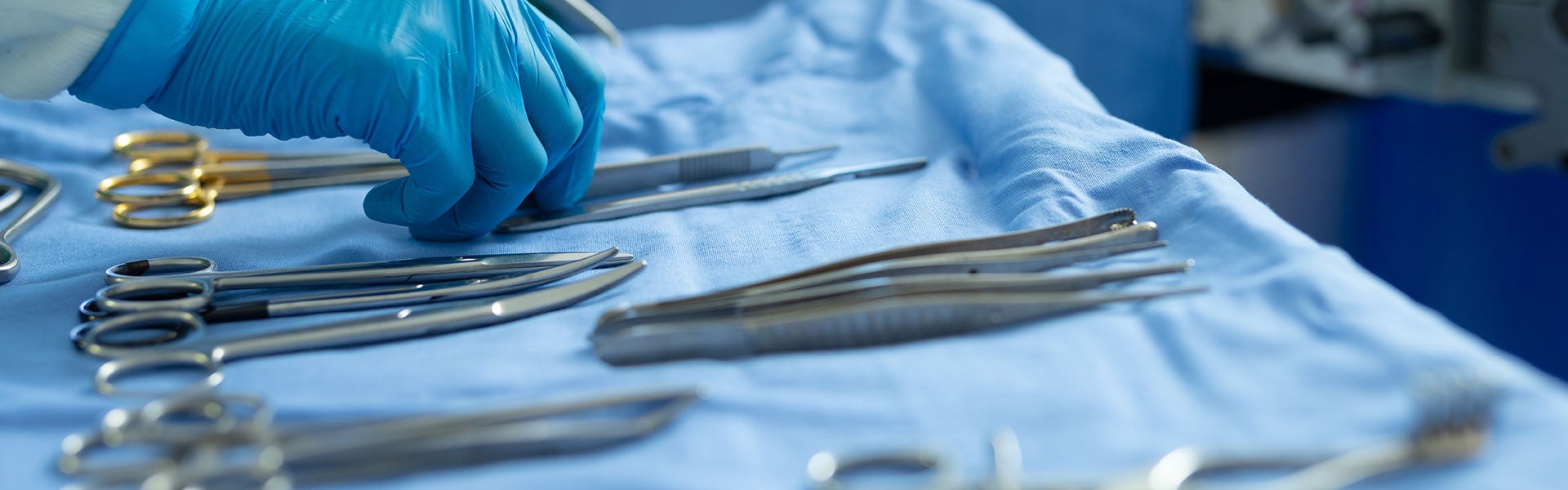
The chart usually tells the story in timestamps. Picture a labor nurse who charts a worsening heart rate pattern and a physician who reaches the bedside much later. That gap might matter, or the injury might have started days before labor began. Only a full record review by qualified physicians can sort that out, and nobody knows the answer before that review happens.
Missed Fetal Distress on the Heart Rate Monitor
A 2008 workshop convened by the National Institute of Child Health and Human Development sorted fetal heart rate tracings into three tiers. Normal tracings support watchful waiting, and indeterminate ones call for reevaluation and closer surveillance. Abnormal tracings call for prompt evaluation and possible intervention. The federal Agency for Healthcare Research and Quality publishes patient safety training on these tracings. It lists first responses such as giving the mother oxygen, changing her position and stopping drugs that stimulate labor.
Delayed Cesarean Decisions and the Operating Room Clock
When a tracing stays abnormal, the next question is how fast the team moved toward a C-section. The chart records when someone made the decision, when anesthesia arrived and when the first incision happened. Staffing logs and call records can explain any gap between those entries. A slow response is not automatically negligence, because the right timing depends on what the mother and baby needed at that moment.
Pitocin Left Running During Signs of Distress
Oxytocin, sold under the brand name Pitocin, strengthens contractions. Its FDA label warns that overstimulating the uterus through improper use can harm both mother and baby. The label tells staff to stop the infusion when contractions become too strong or the baby shows distress. It also calls for continuous observation by trained staff and electronic monitoring of the fetal heart rate for as long as the drug runs.
Nerve and Scalp Injuries From a Difficult Delivery
Some injuries come from the mechanics of delivery rather than from oxygen loss. They usually show up right away, in an arm that hangs limp or a swelling on the baby’s head. The delivery note should describe which maneuvers and tools the physician used, and in what order. That note becomes the starting point for every question in this part of a claim.
Shoulder Dystocia and Erb’s Palsy
NINDS, part of the National Institutes of Health, explains that many brachial plexus injuries happen when a baby’s shoulders become impacted during delivery. Erb’s palsy describes numbness and paralysis in the upper part of that nerve network. Some children improve on their own by 3 to 4 months of age. A rupture, or an avulsion that pulls the nerve from the spinal cord, may need surgery. These claims look closely at how the team freed the shoulder and how much pulling the delivery note describes.
Vacuum and Forceps Complications
On May 21, 1998, the FDA issued a public health advisory urging caution with vacuum-assisted delivery devices. A 2001 review in the Canadian Medical Association Journal tied subgaleal hemorrhage, which is bleeding beneath the scalp, most often to vacuum and forceps deliveries. The same review noted that Health Canada told clinicians to watch vacuum-delivered babies for signs of that bleeding. A claim asks whether the tool was a fair choice, how the physician used it and what the nursery charted afterward.
Newborn Care Problems a Sacramento Birth Trauma Attorney Investigates
In 2005, a research network of the National Institute of Child Health and Human Development published a cooling trial in the New England Journal of Medicine. The trial cooled newborns with hypoxic-ischemic encephalopathy to 33.5 degrees Celsius for 72 hours, starting within six hours of birth. Death or moderate or severe disability at 18 to 22 months occurred in 44% of the cooled group, against 62% of babies who received usual care. Those six hours now shape how a claim reviews the first day of a baby’s life.

Sacramento families deliver at hospitals with very different newborn units. UC Davis Children’s Hospital on X Street runs a Level IV NICU and accepts newborn transfers from a 33-county service area. Sutter calls the Anderson Lucchetti center at its Sacramento medical center home to Northern California’s largest Level IV NICU. Kaiser Permanente Roseville delivers babies in its Women and Children’s Center on Eureka Road. Mercy San Juan Medical Center runs a Level III NICU in Carmichael. When a baby moves between hospitals, the records split between two charts, and a review needs both.
Hypoxic-Ischemic Encephalopathy and the Six-Hour Cooling Window
Hypoxic-ischemic encephalopathy, often shortened to HIE, is brain injury from too little oxygen and blood flow around the time of birth. A claim asks whether staff recognized the baby’s condition at delivery and whether cooling, or a transfer for cooling, began inside the window the research supports. These cases overlap with other Sacramento brain injury claims, because the long-term proof relies on the same neurology and imaging. The starting point differs, since the harm begins in a delivery room instead of a crash or fall.
Cord Blood Gases and Apgar Scores
Two sets of numbers recorded in the first minutes help date an oxygen injury. Umbilical cord blood gases show how acidic the baby’s blood was at birth. Apgar scores grade the baby’s color, breathing, tone, reflexes and heart rate at one and five minutes. Abnormal values can support an injury close to delivery, while normal values can point the review toward a cause that began earlier.
Transport Records When the Baby Changes Hospitals
A baby born at a community hospital may ride to a Level IV unit with a dedicated transport team. That team keeps its own record of temperature, breathing support and timing during the trip. The record shows whether cooling began on the road or only after arrival. It can also bring a separate category of defendant into play under the damage caps covered later on this page.
Untreated Group B Strep and Newborn Infections
The CDC tells health care providers to screen every pregnant woman for group B strep and to give antibiotics during labor when needed. A mother can pass the bacteria to her baby during delivery. In newborns, group B strep most often causes sepsis, pneumonia, meningitis or a bloodstream infection. A claim checks whether the test happened, whether the result reached the labor team and whether antibiotics started in time.
Jaundice That Progresses to Kernicterus
CDC materials describe kernicterus as brain damage from very high bilirubin, and they state that no baby should suffer brain damage from untreated jaundice. Kernicterus can cause athetoid cerebral palsy and hearing loss. The CDC advises a check by a nurse or doctor when the baby is 3 to 5 days old. A baby sent home before 72 hours needs that visit within 2 days of discharge. Discharge instructions, follow-up visits and bilirubin readings show whether those checks happened.
(916) 782-8400
Call for a free consultation
How a Sacramento Medical Malpractice Attorney Proves What Caused the Injury
A cerebral palsy diagnosis does not prove that anyone made a mistake during delivery. The National Institute of Child Health and Human Development notes that most children with cerebral palsy are born with it and that the exact cause is often unknown. Infections, bleeding in the brain and abnormal brain development before birth can lead to the same diagnosis. An honest review says so early, before a family spends years on a claim the records cannot support.
Proof of cause often builds as the child grows. A pediatrician notices stiffness or missed milestones, a neurologist orders an MRI, and the diagnosis takes shape. Each visit adds records that can confirm or rule out a cause tied to delivery. Whether those records connect the injury to a specific error depends on the medicine in that child’s file, and the answer differs from one child to the next.
Which Records Can Parents Request Right Now?
Parents can request both charts today under California Health and Safety Code section 123110. A provider has to allow inspection within five working days of a written request and send copies within 15 days. Ask for the mother’s prenatal and labor records, the complete fetal monitor strips, the newborn nursery chart and every NICU record. Request the transport team’s record separately if the baby changed hospitals.
Physician Testimony on the Standard of Care
California’s civil jury instruction on medical negligence, CACI No. 501, asks jurors to compare the care against what other reasonably careful practitioners would do in the same or similar circumstances. In most cases, jurors learn that standard only from qualified medical witnesses. A birth injury claim usually needs an obstetrician or labor nurse to address the delivery care. It also needs a pediatric neurologist or neonatologist to address what caused the injury. Their review comes before any lawsuit, because the whole case rests on their conclusions.
Alta California Regional Center Records and Services
Alta California Regional Center, on East Commerce Way in Sacramento, serves people with developmental disabilities in Sacramento, Placer, El Dorado, Yolo and six other counties. Its evaluations and program plans document a child’s needs year by year. Welfare and Institutions Code section 4659 directs regional centers to pursue every other funding source, including private entities to the extent they are liable for a service. A life care plan should therefore show which therapies the regional center funds now and which ones a recovery would have to cover.
Filing Deadlines a Sacramento Birth Injury Lawyer Tracks Before the Eighth Birthday
California’s malpractice deadline lives in Code of Civil Procedure section 340.5. An adult has to file within three years of the injury or one year after discovering it, whichever comes first. A child under six gets a different rule. The child’s claim runs three years from the wrongful act or until the eighth birthday, whichever period is longer.

For a baby hurt at birth, the eighth birthday controls, because three years from delivery ends at age three. A child born in March 2026 would generally need to file before the eighth birthday in March 2034. Other rules can shorten that window for certain defendants and certain claims, so the real date depends on who provided the care.
The Child’s Claim and the Eighth Birthday
The eighth-birthday rule covers actions by a minor. It does not protect every claim in the family, and parents should not read it that way. The same section pauses the child’s deadline during any fraud or collusion between a parent or guardian and the defendant’s insurer or provider. That rule targets schemes that kept a child’s case out of court. The safe practice is to count from the earliest date that could apply and file well before it.
Waiting for a Diagnosis Without Losing the Claim
Some birth injuries do not show their full effect until a child misses walking or speech milestones. The eighth-birthday rule gives that picture time to form. Waiting until age seven still carries risk, because hospitals archive records, nurses move away and memories fade. Starting the review once a diagnosis takes shape keeps the evidence within reach.
The Mother’s Own Adult Deadline
A mother’s claim for her own injuries follows the adult rule in section 340.5. That means one year from discovery or three years from the injury, whichever comes first. A uterine rupture or a severe hemorrhage after delivery can start that clock right away. Her claim can expire years before her child’s claim does.
When the One-Year Period Begins
Section 340.5 starts the one-year period when the patient discovers the injury, or when reasonable diligence would have uncovered it. A mother who learns from a later physician that her delivery care fell short may have a discovery question worth examining. Dates in follow-up visit notes often settle when that knowledge arrived. Keep every appointment summary from the months after the birth.
Fraud, Concealment and Objects Left Behind
The three-year outer limit pauses for fraud, for intentional concealment, and for a foreign body left in the patient with no therapeutic or diagnostic purpose. A surgical sponge left inside after a cesarean section would fit the third category. Fraud and concealment require proof, not suspicion. The statute attaches these exceptions to the three-year limit, and the one-year discovery period runs on its own terms.
The 90-Day Notice Under Section 364
Code of Civil Procedure section 364 bars a malpractice lawsuit until the provider has received at least 90 days’ notice of the intent to sue. The notice needs no particular form. It has to state the legal basis of the claim and the type of loss, including the nature of the injuries. If the family serves the notice within the last 90 days before the limitations period ends, the time to file extends 90 days from service. For a child close to the eighth birthday, a notice served one month before that birthday moves the deadline to 90 days after service.
UC Davis Medical Center and Other Public Hospitals
When care at UC Davis Medical Center is part of the review, the calendar changes. The hospital belongs to the Regents of the University of California, which Government Code section 811.2 treats as a public entity. Section 911.2 generally sets a six-month limit for presenting an injury claim to a public entity. Under section 911.4, a family can apply to present a late claim within one year, and time spent as a minor counts toward that year. Section 911.6 requires the board to grant that application when the injured person was a minor for the whole six-month period. Neither rule waits for the eighth birthday.
Do Kaiser Members File in Sacramento Superior Court?
Usually not. Kaiser’s Northern California membership agreements send claims for medical or hospital malpractice to binding arbitration, and members give up a court or jury trial. The Office of the Independent Administrator, which states that it is not part of Kaiser, runs those arbitrations. A lawsuit against a Sacramento provider with no arbitration agreement belongs in Sacramento County Superior Court. The court now hears civil cases in its new courthouse at 500 G Street. Read the arbitration section of your own plan’s Evidence of Coverage before assuming either path.
MICRA Damage Caps a Sacramento Birth Injury Attorney Applies
A jury could find that a delayed C-section caused a child’s lifelong brain injury. Even then, the award for the child’s pain and suffering would stop at $470,000 in 2026. That ceiling comes from Civil Code section 3333.2, which Assembly Bill 35 rewrote for cases filed on or after January 1, 2023. A death case carries a higher 2026 cap of $650,000. The injury cap rises $40,000 each January 1 until it reaches $750,000, and the death cap rises $50,000 a year until it reaches $1,000,000. Starting in 2034, both figures grow 2% each year. A death case also follows the rules on who may sue, which the firm’s page on Sacramento wrongful death claims explains.
Noneconomic damages cover pain, suffering, physical impairment and disfigurement. The cap that applies is the one in effect on the date of judgment, arbitration award or settlement, not the date of birth. A case that resolves in 2027 uses the $510,000 injury figure. A cap is a ceiling rather than a value, and what any case is worth depends on the medical proof inside it.
Three Separate Caps in One Birth Injury Case
Section 3333.2 applies each cap to a group of defendants rather than to each defendant. Health care providers, such as physicians and midwives, share one cap no matter how many the family sues. Health care institutions, such as hospitals, share a second cap. A third cap reaches unaffiliated providers or institutions whose separate negligence happened at, or in transport to, an unaffiliated institution.
How a Newborn Transfer Can Bring In the Third Cap
The third category matters in birth cases because a sick newborn may move between hospitals. One case might involve a delivery at one hospital, a transport team from another system and a NICU at a third. If an unaffiliated transport team or receiving hospital adds harm through its own negligence, that defendant can fall under its own cap. Whether two defendants count as affiliated turns on definitions in the statute, including vicarious liability and corporate ties.
Why One Defendant Counts in Only One Category
The statute bars placing any single provider or institution in more than one category. A hospital cannot sit in the institution group and the unaffiliated group at once. The number of causes of action in the complaint does not change that result. These rules keep the caps from multiplying beyond the three groups the statute names.
Medical Care and Lifetime Needs Have No MICRA Cap
MICRA’s caps reach only noneconomic losses. Past and future medical care, therapy, equipment, home changes and lost earning capacity stay recoverable in full when the proof supports them. For a child with lifelong needs, those economic losses can make up most of a claim. They work much as they do in other catastrophic injury cases, where a life care plan and an economist carry the proof. For a newborn with no work history, the economist projects lost earning capacity from published education and earnings data.
Can the Mother Bring Her Own Claim?
Yes. In Burgess v. Superior Court, decided in 1992, the California Supreme Court held that a mother can recover for serious emotional distress when her obstetrician’s negligent delivery injures her child. The court treated her as a direct victim because the doctor owed her a duty as a patient. She does not have to have watched the injury happen. She cannot recover for loss of the child’s companionship, but she can recover for the distress of the negligent delivery and her reaction to the outcome.
Device Failures Fall Outside MICRA
MICRA’s limits protect health care providers and institutions. A claim against the company that made a faulty fetal monitor, vacuum cup or infusion pump follows product liability rules instead, without those caps. Ask the hospital in writing to preserve the device so engineers can test it. These claims connect to the firm’s work on defective medical device claims in Sacramento.
Winning serious victories for our clients
- $6,000,000 Motorcycle Accident
- $5,000,000 Construction Site Accident
- $3,200,000 Rear End Collision
- $2,500,000 Apartment Fire Accident
- $2,500,000 Apartment Fire with Severe Burns
- $1,000,000 Rear End Freeway Collision
- $1,000,000 Rideshare Head-On Collision
- $1,000,000 Rideshare Accident with Back Injury
- $400,000 Pedestrian Hit in Crosswalk
- $300,000 Side Impact Collision
- $300,000 Big Rig Rear-Ended Passenger Vehicle
- $240,000 Motorcycle vs. Automobile
Past results do not guarantee or predict a similar outcome in any future case. Every case depends on its own facts and the law that applies to it.
How a Sacramento Obstetric Negligence Lawyer Protects a Child’s Recovery
Meet Christopher Kreeger

Christopher L. Kreeger is a California native and an experienced personal injury attorney, dedicated to exclusively representing individuals seriously injured due to the carelessness and neglect of others.
No settlement of a child’s claim is final until a judge approves it. Probate Code section 3500 lets a parent compromise a minor’s claim, but the compromise becomes valid only after the superior court approves it on a petition. In a Sacramento case, that petition goes to the same court that hears the lawsuit. The judge reviews the amount, the liens and the attorney fee before signing an order.

The order also decides where the money goes and who can reach it while the child is a minor. Money placed where nobody can withdraw it without a court order stays protected. Even so, the wrong structure can affect a child’s eligibility for benefits that depend on need.
Where the Money Goes Under Probate Code Section 3611
Section 3611 gives the court several options for a child’s funds. It can order the money into an insured account or a single-premium deferred annuity that releases funds only with court authorization. For a child who will rely on public benefits, it can order a special needs trust under section 3604. Before that hearing, the petitioner mails the petition to three state directors at their Sacramento offices. They lead Health Care Services, State Hospitals and Developmental Services, and the mailing has to go out at least 15 days before the hearing.
Medi-Cal Repayment From a Birth Injury Recovery
When Medi-Cal paid for the birth or the NICU stay, the state can seek repayment from a recovery. Welfare and Institutions Code section 14124.73 requires notice to the Department of Health Care Services within 30 days of filing a claim or lawsuit. Under section 14124.76, the lien reaches only the part of a recovery that represents medical expenses. A court decides that share if the two sides disagree. Malpractice cases add Civil Code section 3333.1, which lets the defense show the jury certain benefits already paid and bars that source from then recovering against the plaintiff. Whether that rule reaches a particular payer is a question to settle before anyone signs a release.
Paying Future Damages Over Time Under Section 667.7
Section 667.7 applies when a judgment against a health care provider awards $250,000 or more in future damages. Either side can then ask the court to order periodic payments instead of a lump sum. The judgment names who receives the money, how much, how often and for how long. A defendant without adequate insurance has to post security for the payments. The schedule can change only if the injured person dies.
Attorney Fee Limits Under Business and Professions Code Section 6146
California caps contingency fees in medical negligence cases, and the caps apply whether the client is an adult or an infant. The limit is 25% of the recovery when the case settles before anyone files a lawsuit or demands arbitration. It rises to 33% when the recovery comes after that filing. A fee above 33% requires a motion after a trial or arbitration, and the court or arbitrator decides it for good cause.
The percentage applies to the net recovery after case costs come out. Kreeger Law Firm advances those costs and takes them out of a recovery as a line item separate from the fee. If the claim ends with no recovery, the family repays none of those costs. When periodic payments are part of an award, the court assigns them a total value based on life expectancy for the fee calculation. In a child’s case, California Rules of Court rule 7.955 also requires the judge to approve the fee as reasonable before the firm receives it.
Ask a Sacramento Birth Injury Lawyer to Review Your Child’s Delivery
A birth injury case starts with paper that already exists. The monitor strips, the delivery note, the cord gases and the NICU chart sit in hospital systems right now. Requesting them early lets a physician review answer the cause question while your child’s diagnosis is still taking shape.
Kreeger Law Firm offers a free consultation to Sacramento families who believe a delivery or newborn care error hurt a child or a mother. Chris Kreeger will listen to what happened, explain which deadline applies to each family member and tell you which records to gather first. You can read about Chris Kreeger’s practice and bar admissions before you call. Spanish-speaking staff can help with the conversation.
If you want a Sacramento birth injury lawyer to look at your child’s delivery records, call (916) 782-8400 or send Chris a note from the contact page today.
Other Injury Cases Chris Kreeger Handles in Sacramento
Kreeger Law Firm also represents Sacramento families after these serious injuries and losses.